

Mature Skin · Guide
The number on the scale finally moved, and then your face changed: hollower cheeks, a softer jawline, a tired look nobody warned you about. Here is why GLP-1 weight loss can show more on your face after menopause, and what skincare can and can’t do about it.

The short answer
“Ozempic face” is the hollow, looser look that can follow fast weight loss. A dermatologist at Henry Ford Health says there’s no evidence the drugs change the face directly: rapid weight loss is the main cause.1 After menopause it can look more dramatic, because skin has already lost about 30% of its collagen in the first five years.2 No cream can replace lost fat or lift sagging skin.3 A retinoid at night, a rich moisturizer and daily SPF can help the skin itself look firmer and smoother while your weight settles.15
01What is Ozempic face?
Ozempic face isn’t a medical diagnosis. It’s a popular name for hollowed cheeks, sagging skin and drooping jowls after quick weight loss. The same thing can happen after bariatric surgery or a strict diet, so the name is a little unfair to the drug.1 You may notice it around the cheeks, temples and under the eyes, where GLP-1 related fat loss tends to be greatest.6
Plenty of women are asking about it. Google searches for “Ozempic face” rose 4,600% between November 2021 and December 2024, closely tracking semaglutide prescriptions.6
of US adults aged 50 to 64 said they were currently taking a GLP-1 drug in a late-2025 KFF poll, the highest of any age group. Among all women, it was 15%.7
The midlife overlap is also getting more attention from menopause specialists. At The Menopause Society’s meeting in October 2026, Mayo Clinic researchers presented records from more than 3,800 women aged 45 and older. Among semaglutide users, those on menopause hormone therapy lost slightly more weight at their last follow-up: 11.9% of body weight compared with 10.9%.8 This is an early, retrospective finding and doesn’t mean anyone should start hormones for weight loss, but it shows how many women are now going through both changes at once.
02Why does it show more after menopause?
Your face is built in layers, and by your 50s each one is already changing. Falling weight lands on top of all of it.
- Skin. Collagen drops by about 30% in the first five years after menopause.2 After that, studies estimate a loss of 2.1% of collagen and 1.13% of skin thickness per postmenopausal year.4
- Fat. Midface fat pads drift downward and lose volume in their upper part as we age.9
- Bone. The facial skeleton slowly recedes, leaving soft tissue with less support.10
Lost facial fat and reduced skin elasticity both contribute to the look.1 Skin with less collagen has less bounce, so the same drop in volume can read as looseness. That’s why two women can lose the same weight and look very different.
03How much facial volume do you lose?
Research is still thin, but one study gives us a first measurement. Researchers compared head scans of 20 patients taken before and after GLP-1 treatment and found a median 9% drop in midface volume. Each 10 kg (about 22 lb) of weight lost was linked to about 7% less facial volume.11
Take these numbers as a starting point, not a forecast. The group was small, the scans were done for other medical reasons, and there was no comparison group.11 Still, the study supports what many women see in the mirror: the more weight you lose, the more the surface layer of facial fat tends to change.

What women often notice
- Cheeks that look flatter or hollow
- Temples and under-eyes that look sunken
- Softer jawline and new jowls
- Skin that looks crepey or dull
- Lines that seem deeper, without more sun or stress
Facial changes tend to stabilize once your weight does, although lost volume may not come back.1
04Can skincare fix Ozempic face?
Not the volume part, and any jar that promises otherwise deserves your suspicion. The American Academy of Dermatology is clear that a cream or lotion can’t penetrate deeply enough to lift sagging skin.3 What skincare can do is improve the surface, and that counts for more than you might think when the layers beneath have changed.
Skincare can
- Help skin look firmer and smoother over time with a retinoid35
- Reduce the look of crepey, dehydrated skin
- Slow further collagen damage with daily SPF1
Skincare can’t
- Replace lost facial fat
- Lift jowls or tighten deep tissue
- Rebuild facial bone
05Which ingredients help most?
Retinoids: the place to start
If you add one active, make it a retinoid. In a study of 36 older adults, 0.4% retinol applied for 24 weeks reduced fine wrinkling and raised procollagen and glycosaminoglycans, which help skin hold water, compared with an untreated control.5 Retinal (retinaldehyde), a step closer to the active form of vitamin A in skin, increased epidermal thickness and elasticity at 0.05% in a one-year controlled study.12

Our pick for looser, crepey-looking skin
Retinal 0.2% Barrier Serum
Retinaldehyde at 0.2% in a barrier-supporting base, made for mature, sensitive skin. Use it at night to help skin look firmer and smoother over time.
Shop Retinal 0.2%Start with two or three nights a week and increase only as your skin allows. Mature skin can be easily irritated, so there’s no prize for rushing.
Barrier support: an easy visible win
Much of the quick improvement you see from a “firming” cream comes from moisture.3 That isn’t a trick. Well-hydrated skin looks smoother, and creases look softer. A ceramide cream on slightly damp skin, morning and night, is the simplest way to get there, especially with the heating on and winter air outside.

Our pick for dry, tired-looking skin
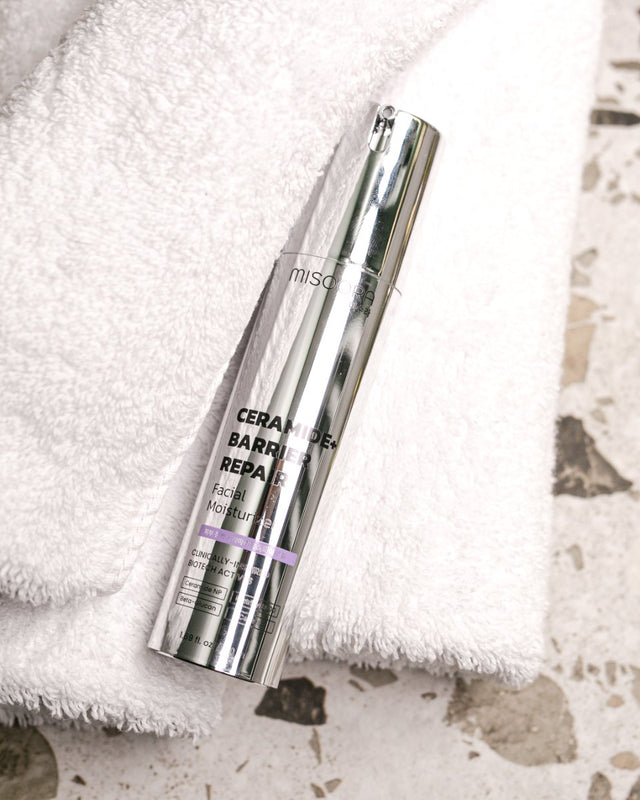
Ceramide+ Barrier Repair Moisturizer
A ceramide-rich cream for dry, mature skin. Use it as your last step, morning and night, to help skin look cushioned and feel comfortable.
Shop Ceramide+Biotech serums: for a denser look
PDRN and exosome serums are newer and have far less human data behind them than retinoids, so see them as a supporting step. If you want a richer evening routine, this is where it fits, right after retinal.

Our pick for skin that looks thin and tired
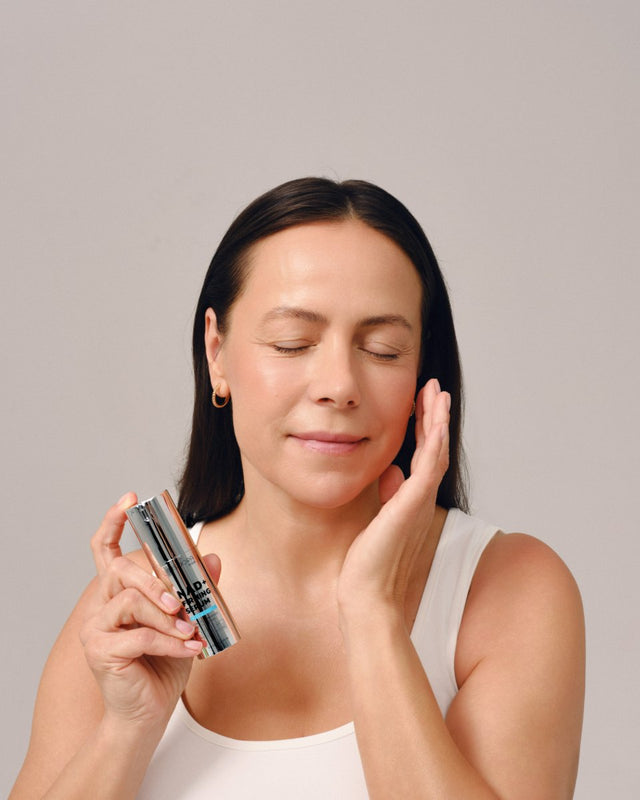
PDRN Exosome EGF Night Renewal Serum
2,000 ppm PDRN with exosomes, EGF and a peptide, 2,100 ppm of actives in total. Applied after retinal at night, it helps skin look denser and smoother.
Shop PDRN Serum
Keep it simple
One active at night. Your skin is already going through a lot. Don’t add acids and scrubs on top of retinal.
Moisturize twice a day. Include the neck and the jawline, not just the cheeks.
Give it time. The retinol study above ran for 24 weeks, so judge your routine in months, not days.5
06How can you protect your face while losing weight?
You can’t control exactly where you lose fat, but a few habits give your skin a better chance. Talk with your prescriber before changing your dose or stopping a medication.
What actually helps
- Ask about your pace. Slower loss gives the body more time to adjust. If weight is coming off too quickly, your doctor can talk with you about a lower dose or a different medication.1
- Keep protein on your plate. The body uses protein to make collagen and elastin, and it helps preserve muscle. Milk, meat, eggs, soy and beans all count, even when your appetite is low.1
- Wear sunscreen every day. UV breaks down collagen and elastin.1 The AAD recommends broad-spectrum, water-resistant SPF 30 or higher.13
- Be realistic about collagen supplements. They’re unlikely to restore lost volume, though limited evidence suggests they may help fine wrinkles.1
07A routine for skin after GLP-1 weight loss
This routine is about skin quality: fewer steps, used every day, while your face settles.
Morning
Cleanse, hydrate, protect


Evening
Renew and cushion
The evening order matters: retinal first, then the PDRN serum, then moisturizer. On nights you skip retinal, go straight from cleanser to PDRN serum and moisturizer.

Made for mature skin
MISOORA products were developed with 50+ skin in mind: thinner, drier and slower to recover. Women of all ages use them, and they’re a good fit when your skin needs steady care rather than a harsh reset.
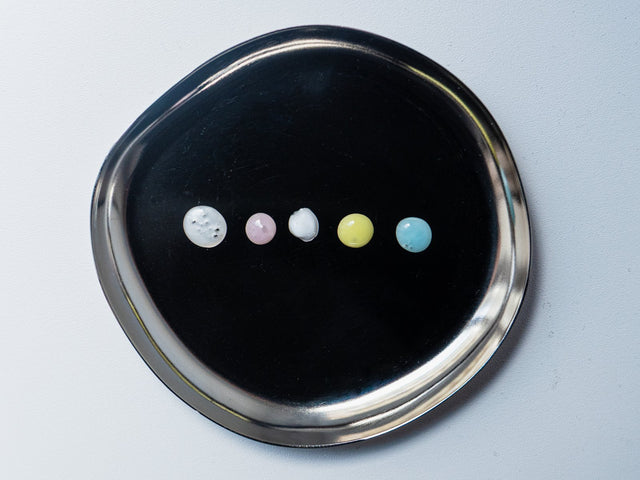
The Skin Recharge Set brings together all five steps, morning and night, so you don’t have to work out what goes with what.
Shop the Skin Recharge Set


08When is it time to see a dermatologist?
If lost volume bothers you, a good skincare routine won’t be enough, and it’s fine to want more. A board-certified dermatologist or plastic surgeon can look at your face and talk you through the options, ideally once your weight is stable.
- Fillers. Hyaluronic acid gel gives immediate results, while biostimulatory fillers build volume gradually over weeks.1
- Collagen treatments. Microneedling and laser resurfacing can trigger new collagen.1
- Tightening devices. Ultrasound and radiofrequency heat deeper tissue, and laser resurfacing is the most effective of the tightening options, with more downtime.3
- Surgery. It may be an option after major weight loss.6
See your doctor promptly if you have ongoing fatigue or trouble eating enough along with your weight loss. Those need attention beyond your skin.1
Key takeaways
- Ozempic face comes mainly from fast weight loss, not from a direct drug effect on the skin.
- After menopause it can show more, because skin has already lost about 30% of its collagen in the first five years.
- In one small study, midface volume fell by a median 9%, with about 7% less volume for every 10 kg lost.
- No cream replaces lost fat, but a retinoid, a ceramide moisturizer and daily SPF can help skin look firmer and smoother.
- For real volume or lift, talk to a board-certified dermatologist or plastic surgeon once your weight is stable.
FAQ
What does Ozempic face look like?
Usually hollowed cheeks, sunken temples or under-eyes, looser skin and new jowls. It can look more noticeable in women after menopause, whose skin has less collagen.
Does Ozempic face go away?
Facial changes tend to stabilize when your weight does, but lost volume may not come back by itself. Skincare can improve how the skin looks, and fillers can restore volume.
Can I prevent Ozempic face?
You can’t fully prevent it, but a slower pace agreed with your doctor, enough protein, daily SPF and steady skincare may make changes less noticeable.
Is it safe to use retinal while taking a GLP-1 drug?
We don’t know of any specific interaction, but research on this combination is limited. If your skin feels unusually dry or sensitive, start slowly and check with your prescriber or dermatologist. Don’t use retinoids if you are pregnant or trying to become pregnant.
Does collagen powder help Ozempic face?
It’s unlikely to bring back lost facial volume. Limited evidence suggests collagen supplements may help fine wrinkles, so see them as an optional extra.
Does hormone therapy prevent Ozempic face?
We found no evidence that it does. Hormone therapy may help skin in other ways, but whether it’s right for you is a medical decision based on your overall health.
Keep reading
- Why Skin Sags After Menopause, and What Creams Can (and Can’t) Do
- Thin Skin After Menopause: Why You Bruise and Tear So Easily Now, and What Helps
References
- Henry Ford Health Staff; reviewed by Alison Boucher, MD. Ozempic face. Henry Ford Health blog, September 2026. henryford.com
- DeGiovanni C. Managing menopausal skin: a clinician’s review. EMJ Dermatol. 2025;13(1):90-94. emjreviews.com
- American Academy of Dermatology. Firm sagging skin. aad.org
- Reilly DM, Lozano J. Skin collagen through the lifestages: importance for skin health and beauty. Plast Aesthet Res. 2021;8:2. oaepublish.com
- Kafi R, Kwak HS, Schumacher WE, et al. Improvement of naturally aged skin with vitamin A (retinol). Arch Dermatol. 2007;143(5):606-612. PubMed 17515510
- Hebebrand M. Clinicians see intersection of weight loss and facial aging. Dermatology Times, January 19, 2026 (reporting McCarthy AD, et al.). dermatologytimes.com
- KFF. Poll: 1 in 8 adults say they are currently taking a GLP-1 drug. November 14, 2025. kff.org
- Jennings S. Menopause hormone therapy linked to greater weight loss with semaglutide in real-world study. Patient Care Online, October 22, 2026 (reporting Castaneda R, et al., The Menopause Society 2026 Annual Meeting). patientcareonline.com
- Gierloff M, Stöhring C, Buder T, Gassling V, Açil Y, Wiltfang J. Aging changes of the midfacial fat compartments: a computed tomographic study. Plast Reconstr Surg. 2012;129(1):263-273. doi:10.1097/PRS.0b013e3182362b96
- Mendelson B, Wong CH. Changes in the facial skeleton with aging: implications and clinical applications in facial rejuvenation. Aesthetic Plast Surg. 2012;36(4):753-760. PMC3404279
- Sharma RK, Vittetoe KL, Barna AJ, et al. Radiographic midfacial volume changes in patients on GLP-1 agonists. Otolaryngol Head Neck Surg. 2025;173(2):360-366. PubMed 40407186
- Diridollou S, et al. Efficacy of topical 0.05% retinaldehyde in skin aging by ultrasound and rheological techniques. Dermatology. 1999;199(Suppl 1):37-41. PubMed 10473959
- American Academy of Dermatology. How to select a sunscreen. aad.org
Written by MISOORA Editorial. This article is for general information and is not medical advice. Skincare results described are cosmetic and vary from person to person. GLP-1 drugs and hormone therapy are prescription treatments, so talk to your doctor before starting, changing or stopping them.