

Mature Skin · Guide
A bump against the counter leaves a purple mark for weeks. A bandage takes a layer of skin with it. The backs of your hands look see-through. Here is why skin gets thinner after menopause, and what you can do to make it look and feel stronger.

The short answer
Skin gets thinner after menopause because falling estrogen speeds up collagen loss: about 30% of skin collagen goes in the first five years, then roughly 2% a year after that.12 Years of sun add to it. Thinner skin bruises and tears more easily and heals more slowly. You can’t reverse it completely, but a retinoid at night, a rich moisturizer twice a day, daily SPF and gentle handling help skin look thicker, smoother and more resilient.48
01Why does skin get thinner after menopause?
Estrogen helps keep skin thick and springy. It supports collagen, the protein that gives skin its strength, and it helps the skin hold on to water. When estrogen falls at menopause, that support drops quickly.
Women lose about 30% of their skin collagen in the first five years after menopause, and the loss tracks more closely with years since menopause than with birthdays.1 After that early drop, studies estimate an average loss of 2.1% of skin collagen and 1.13% of skin thickness for every postmenopausal year.2
of skin collagen lost, on average, for each year after menopause, along with a 1.13% yearly drop in skin thickness.2
Many women don’t connect these changes with menopause at all. In a survey of 5,090 women in the US, UK, Brazil and China published in October 2026, 56% first put their menopause-related skin changes down to general aging, and half didn’t know that hormonal changes can affect the skin.3 Knowing the cause matters, because it changes what you should look for in a routine.
02What does thin skin look like?
Thin skin rarely shows up all at once. Most women notice a few small changes first, usually on the hands, forearms and shins, where skin gets the most sun and the most knocks.

Common signs
- Skin that looks crinkly or papery, especially on the backs of the hands
- Veins that are easier to see than they used to be
- Purple or red bruises from bumps you don’t remember
- Small tears or scrapes from tape, a pet’s claw or a cabinet edge
- Cuts and scrapes that take longer to heal
- Skin that feels dry and tight, even after moisturizer
Dermatologists have a name for the most advanced form of this: dermatoporosis, a chronic fragility of aging skin, named after osteoporosis because skin, like bone, loses its supporting structure. The first signs tend to appear around age 60, and French studies found it in roughly a third of adults aged 60 and older.4 Starting a protective routine earlier, in your late 40s and 50s, is the practical takeaway.
Healing also changes. Compared with premenopausal women, postmenopausal women show slower re-growth of the skin’s surface and less new collagen in healing wounds.1
03Why do I bruise so easily now?
Those flat, dark purple patches on the forearms and backs of the hands have a name too: actinic (or solar) purpura. Years of sun break down the collagen that cushions the tiny blood vessels in the skin. When skin is also thinner, a light bump or a twist of the skin is enough to make a vessel leak.5
of people over 50 have actinic purpura, rising to about 30% of people aged 75 and older.5
These bruises usually fade within one to three weeks, though they can leave a brownish stain behind.5 They are harmless in themselves, but they are a clear sign that the skin has lost padding and needs more protection. Long-term steroid use and blood thinners can make them more common, so mention them to your doctor if you take either.
04Can you make thin skin thicker?
You can’t turn back the clock on collagen, but some ingredients have measurable effects on the skin’s structure. Retinoids have the strongest evidence, and they are considered a mainstay of care for fragile, aging skin.4
Retinoids: the best-studied option
In a study of 36 older adults with an average age of 87, a 0.4% retinol lotion applied to one inner arm for 24 weeks reduced fine wrinkling and roughness compared with the untreated arm. Biopsies showed more glycosaminoglycans, which help skin hold water, and more procollagen, the building block of collagen.6 This was skin that had seen little sun, so the change reflected natural aging, not only sun damage.
Retinal (retinaldehyde), the form one step closer to the active vitamin A in skin, has been tested on the face. In a one-year controlled study, people who used 0.05% retinaldehyde cream had a significant increase in epidermal thickness at the temple and better skin elasticity than those using only an emollient.7 Retinaldehyde also raises CD44, a skin receptor involved in keeping the outer layer plump and renewing.4

Our pick for thin, crepey-looking skin
Retinal 0.2% Barrier Serum
Retinaldehyde at 0.2% in a barrier-supporting base, made for mature, sensitive skin. Use it at night to help skin look firmer, smoother and less papery over time.
Shop Retinal 0.2%Thin skin is often sensitive skin, so go slowly. Start with two or three nights a week, apply to dry skin, and use a pea-sized amount for the whole face. You can use it on the backs of the hands too, once your face tolerates it.
Growth factors and biotech serums
Early research is looking at growth factors for fragile skin. In one very small study of six people, a topical epidermal growth factor (EGF) lowered the number of purple bruise-like patches from an average of 15 to 2.3 over six weeks.4 That is far too small to draw firm conclusions, but it explains the interest in EGF-containing serums for mature skin.

Our pick for skin that looks thin and tired
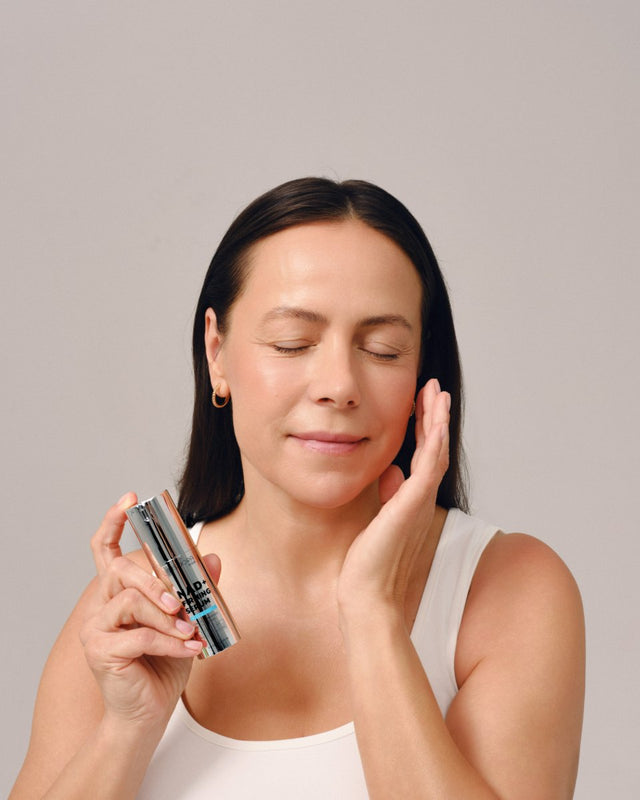
PDRN Exosome EGF Night Renewal Serum
2,000 ppm PDRN with exosomes, EGF and a peptide, 2,100 ppm of actives in total. Applied after retinal at night, it helps skin look denser, smoother and more cushioned.
Shop PDRN Serum05Does moisturizer really help fragile skin?
Yes, and the evidence is better than most people expect. Dry skin is less flexible, so it splits and tears more easily. Emollients that support the skin barrier are part of every expert plan for fragile skin.4
The clearest proof comes from a cluster randomized trial in 14 aged-care homes in Western Australia. Residents whose skin was moisturized twice a day had almost half as many skin tears over six months as residents on usual care.8
Those residents were older and frailer than most women reading this, but the lesson carries over: moisturizing every morning and every night, not just when skin feels dry, keeps fragile skin more supple. Apply to slightly damp skin after washing, and include the hands, forearms and shins.

Our pick for dry, fragile skin
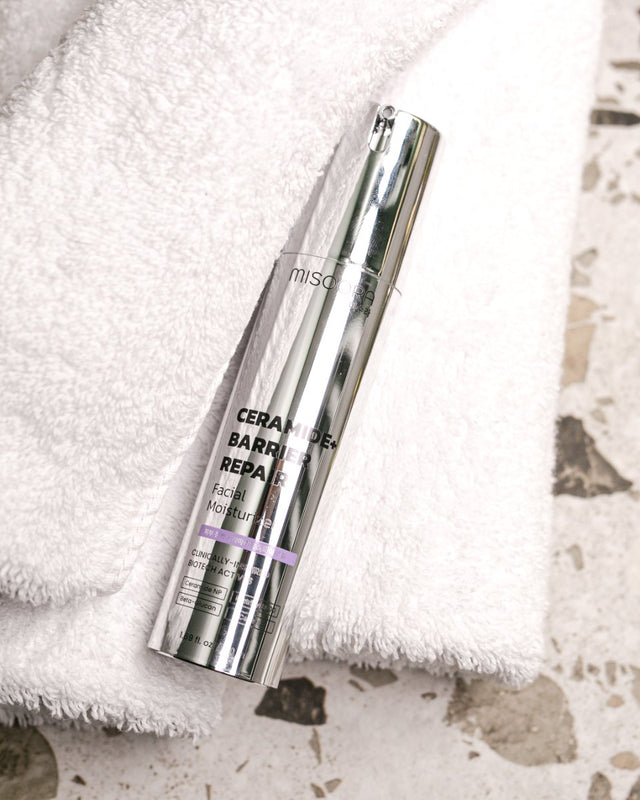
Ceramide+ Barrier Repair Moisturizer
A ceramide-rich cream for dry, mature skin. Use it morning and night as the last step to cushion thin skin, ease tightness and help it feel more comfortable.
Shop Ceramide+06How to protect thin skin every day
Products help, but small habits matter just as much once skin is fragile.
What actually helps
- Daily sunscreen, all year. Sun damage is a major driver of fragile skin and of solar bruising.5 The American Academy of Dermatology recommends a broad-spectrum, water-resistant sunscreen with SPF 30 or higher.9 Don’t forget the backs of your hands.
- Cover up. Long sleeves and gloves for gardening protect the forearms and hands from both UV and scrapes.5
- Cleanse gently. Use a mild, non-foaming cleanser and lukewarm water. Skip scrubs, rough washcloths and hot showers.
- Pat, don’t rub. Dry skin by pressing a soft towel against it.
- Be careful with tape. Ask for paper tape or silicone dressings, and peel them off slowly, low and parallel to the skin.
- Pad sharp corners. Bed frames, car doors and cabinet edges cause many of those mystery bruises.

Our pick for gentle cleansing
Centella Ceramide Amino Acid Cleanser
A mild amino acid cleanser with centella and ceramides that removes sunscreen and makeup without leaving thin, dry skin feeling stripped.
Shop the cleanser07A routine for thin skin after 50
Keep it simple and steady. Thin skin does best with fewer, well-chosen steps used every day, rather than a shelf of strong actives.

The rules for fragile skin
One active at night. Retinal is your main tool. Don’t layer it with acids or scrubs.
Moisturize twice a day. Every morning and every night, face, hands and arms.
SPF every morning. Even in winter, even on cloudy days.
Give it time. Expect 8 to 12 weeks before skin looks smoother and feels stronger.
Morning
Cleanse, cushion, protect

Evening
Renew and repair
The evening order matters: retinal first, then the PDRN serum, then moisturizer. On nights you skip retinal, go straight from cleanser to PDRN serum and moisturizer. If you want the whole routine in one box, the sets below cover it.

Made for mature skin
Every MISOORA product was developed with 50+ skin in mind: thinner, drier and slower to recover. That means gentle bases, barrier-friendly ingredients and actives at levels mature skin can use every day, though women of all ages use them.
The Skin Recharge Set brings together all five steps, morning and night, so you don’t have to guess what goes with what.


08When to see a doctor
Skin that thins with age is common, but some bruising has other causes. Check with your doctor if you notice:
- Bruises on your trunk, back or face, or bruises that appear with no bump at all
- Bleeding gums, frequent nosebleeds or tiny red dots on the skin
- Very large bruises, or many new ones at once
- A cut or skin tear that doesn’t heal within a couple of weeks, or looks infected
- New bruising after starting a medication, especially a blood thinner or steroid
A dermatologist can confirm actinic purpura, since its signs can look like blood or platelet disorders.5 It is also worth asking about hormone therapy if you are weighing it for other menopause symptoms: estrogen has been linked to thicker skin, with one trial reporting a 30% increase in dermal thickness after a year of oral estrogen.1 Whether it suits you is a medical decision that depends on your overall health, not on your skin alone.
Key takeaways
- Skin loses about 30% of its collagen in the first five years after menopause, then about 2% a year, and gets thinner each year.
- Thin skin shows up as papery hands, visible veins, easy bruising, skin tears and slower healing.
- Easy bruising on the arms and hands is usually actinic purpura, caused by sun damage on top of thinning skin.
- Retinoids, including retinal, have the best evidence for helping thin, aging skin look thicker and smoother.
- Moisturizing twice a day cut skin tears almost in half in a clinical trial. Add daily SPF 30+ and gentle handling.
FAQ
Does menopause make your skin thinner?
Yes. Falling estrogen speeds up collagen loss, with about 30% lost in the first five years after menopause and roughly 2% a year after that. Skin thickness drops by about 1% a year as well.
Why is the skin on my hands and arms so thin?
The hands and forearms get years of sun and constant use. Sun damage breaks down collagen on top of the hormonal loss, so these areas usually thin first and bruise most easily.
Can thin skin become thicker again?
Partly. Retinoids such as retinol and retinal have been shown to increase epidermal thickness and collagen building blocks in aging skin. Results are gradual and need steady use, sun protection and a good moisturizer.
What is the best moisturizer for thin, fragile skin?
A rich, fragrance-free cream with barrier lipids such as ceramides, used twice a day on slightly damp skin. Consistency matters more than any single ingredient.
Is retinal safe for thin, sensitive skin?
Most people can use it if they start slowly, two or three nights a week, and moisturize well. If your skin stings or peels, use it less often. Avoid using it on broken or torn skin.
Why do I get bruises without bumping into anything?
With thin, sun-damaged skin, a bump can be so small you don’t notice it. But unexplained bruising on the body, or bruising with bleeding gums or nosebleeds, should be checked by a doctor.
Keep reading
- Crepey Skin After Menopause: Why Your Neck, Chest and Arms Change, and What Helps
- Estrogen and Your Skin: What Happens When It Drops at Menopause (and What Still Works)
References
- DeGiovanni C. Managing menopausal skin: a clinician’s review. EMJ Dermatol. 2025;13(1):90-94. emjreviews.com
- Reilly DM, Lozano J. Skin collagen through the lifestages: importance for skin health and beauty. Plast Aesthet Res. 2021;8:2. oaepublish.com
- Galderma. New Galderma research reveals more than half of women mistake menopause-related skin changes for signs of ageing. Business Wire, October 13, 2026 (survey of 5,090 women in the US, UK, Brazil and China; data on file). uniindia.com
- Dyer JM, Miller RA. Chronic skin fragility of aging: current concepts in the pathogenesis, recognition, and management of dermatoporosis. J Clin Aesthet Dermatol. 2018;11(1):13-18. jcadonline.com
- Syed HA, Masood S. Actinic purpura. In: StatPearls. Treasure Island (FL): StatPearls Publishing; updated July 2026. NCBI Bookshelf NBK448130
- Kafi R, Kwak HS, Schumacher WE, et al. Improvement of naturally aged skin with vitamin A (retinol). Arch Dermatol. 2007;143(5):606-612. PubMed 17515510
- Diridollou S, et al. Efficacy of topical 0.05% retinaldehyde in skin aging by ultrasound and rheological techniques. Dermatology. 1999;199(Suppl 1):37-41. PubMed 10473959
- Carville K, Leslie G, Osseiran-Moisson R, Newall N, Lewin G. The effectiveness of a twice-daily skin-moisturising regimen for reducing the incidence of skin tears. Int Wound J. 2014;11(4):446-453. espace.curtin.edu.au
- American Academy of Dermatology. How to select a sunscreen. aad.org
Written by MISOORA Editorial. This article is for general information and is not medical advice. Skincare results described are cosmetic and vary from person to person. If you have concerns about changes in your skin, unexplained bruising or wounds that don’t heal, talk to your doctor or a board-certified dermatologist.