

Menopause & Mature Skin · Buying Guide
Black Friday week is when “menopause” face creams pile into carts. Your skin really does change after menopause, but does it need products made for menopause? Here is what dermatologists and the research say, which ingredients are worth your money, and which labels are mostly marketing.

The short answer
A routine built for skin after menopause is worth it. A “menopause” label on its own is not. Doctors note that most products marketed to women in menopause use the same ingredients as regular skin care,2 and in one side-by-side check, a menopause night cream cost 25% more than a near-identical anti-aging cream.1 Put your money into what has evidence: daily sunscreen, a retinoid, a moisturizer for dry skin and a gentle cleanser.4
01Does menopause really change your skin?
Yes, and quickly. According to the American Academy of Dermatology, women’s skin loses about 30% of its collagen in the first five years of menopause, then about 2% a year for the next 20 years.4 Skin also holds less water, so it gets drier, thinner and slacker, and around age 50 it tends to become more sensitive.4
The changes affect more than the mirror. In a survey of 4,303 women in perimenopause and menopause across nine countries, published in Dermatologic Surgery in October 2026, most said skin changes affected how they felt about themselves. Women in perimenopause named dryness as their top skin concern; women past menopause named fine lines, wrinkles and loss of firmness.3
So the problem is real. The question is whether a product needs the word “menopause” on it to help.
02What does “menopause skincare” actually mean?
Legally, nothing specific. In the US, a product is a cosmetic or a drug based on what it is intended to do, not on who it is marketed to. A cosmetic is meant for cleansing, beautifying or changing the appearance. A drug is meant to treat or prevent disease or to affect the structure or function of the body.5 There is no separate category for menopause products, and the FDA says the popular word “cosmeceutical” has no meaning under the law.5
Cosmetics, including face creams and serums, do not need FDA approval before they go on sale.5 The Modernization of Cosmetics Regulation Act, passed in 2022, now requires brands to register their facilities, list their products and ingredients with the FDA, and keep records showing their products are safe.7 That is a safety floor. It says nothing about whether a cream does what the front of the jar promises.
more: what a “menopause” night cream cost compared with a near-identical anti-aging cream with almost the same active ingredients, in a Harvard Health comparison.1
03Is menopause skincare a marketing gimmick?
Partly. Doctors interviewed by the Associated Press in 2026 described the marketing to women in midlife as very aggressive and said many over-the-counter menopause products don’t differ in ingredients from regular ones.2 A Massachusetts General Hospital menopause specialist advised women to keep using products that already work for them rather than pay more for a menopause version, until someone proves menopausal skin needs something different.1
That does not mean every product sold to women over 50 is hype. It means the label is not the thing to pay for. What helps mature skin is the right ingredients at useful levels, in a formula gentle enough to use every day.
What to look for instead of a label
- A named active and its strength, such as “retinal 0.2%,” rather than a vague “complex.”
- Ingredients with human studies, not just lab data or a list of plant extracts.
- A base made for dry, thinner skin: ceramides, glycerin or hyaluronic acid, and no fragrance.4
- Realistic wording such as “visibly smoother” or “looks firmer.”

04Which skincare ingredients are worth paying for after menopause?
Dermatologists keep coming back to the same short list.124 Here is how we would rank it if you are deciding where your budget goes this week.
1. Daily sunscreen
The AAD recommends a broad-spectrum sunscreen with SPF 30 or higher every day.4 In a four-year randomized trial of 903 adults, people who used sunscreen daily showed 24% less skin aging than those who used it when they felt like it, and the benefit held regardless of age.8 No serum can keep up with collagen that daily UV keeps breaking down.
2. A retinoid
Retinoids have the strongest track record for the look of lines. In a study of 36 people with an average age of 87, a 0.4% retinol lotion used up to three times a week for 24 weeks significantly reduced fine wrinkles compared with a plain lotion, and skin samples showed more procollagen and glycosaminoglycans.9 The AAD also names retinol, along with peptides, as ingredients that can increase collagen in skin after menopause.4

Our pick for the retinoid step
Retinal 0.2% Barrier Serum
Retinal is one step closer to the active form of vitamin A than retinol, at a level chosen for mature, sensitive skin and buffered with ceramides. It visibly smooths fine lines and uneven texture. Evenings, first in your routine, on dry skin.
Shop the retinal serum3. A moisturizer that fixes dryness
Dryness is the top complaint in perimenopause.3 The AAD suggests applying moisturizer after bathing and throughout the day, and says a moisturizer with hyaluronic acid or glycerin can be especially helpful.4 Ceramides help strengthen the skin barrier.1
4. A gentle cleanser
Skin becomes more sensitive around 50, and the AAD recommends a mild cleanser instead of soap.4 Our guide to why your face feels tight after washing explains what to switch.
Nice extras, not the foundation
Peptides, NAD+ and biotech actives such as PDRN can add support for the look of firmer, smoother skin, but their evidence is smaller and newer than the evidence for sunscreen and retinoids. Add them once the basics are covered, not instead of them.
05Red flags on menopause skincare labels
“Balances your hormones.”
A cream sold as a cosmetic can only change how skin looks. A product intended to affect how the body works is a drug under US law.5 If a jar promises hormone effects without a drug label, the claim and the product don’t match.
“Regenerates cells” or “rebuilds your skin.”
The FDA lists claims such as regenerating cells as examples that can make a product a drug, even when it is sold as a cosmetic, and says it is concerned about drug claims on anti-wrinkle products.56 Honest cosmetic wording talks about how skin looks and feels.
“Clinically proven.”
Ask: proven to do what, in how many people, for how long? Many brand studies are small and unpublished. A claim tied to a named study, a number of participants and a time frame is worth more than the phrase alone.
“Visibly smoother skin in 8 to 12 weeks.”
This is the kind of promise a cosmetic can keep. Moisturizing is a cosmetic claim, and products that make lines less noticeable by moisturizing are cosmetics.6 The retinol study above took 24 weeks.9
One more to watch: fragrance and long lists of botanical additives. A UT Southwestern dermatologist told the AP that many of these additives are contact allergens,2 and the AAD suggests fragrance-free moisturizers for skin that is easily irritated in menopause.4
06A simple routine that covers the basics
You don’t need a 10-step shelf. Four or five products in the right order cover everything the evidence supports. Retinal goes on first at night, then any repair serum, then moisturizer.
Morning
Protect


Evening
Renew

Our pick for dry, tight skin
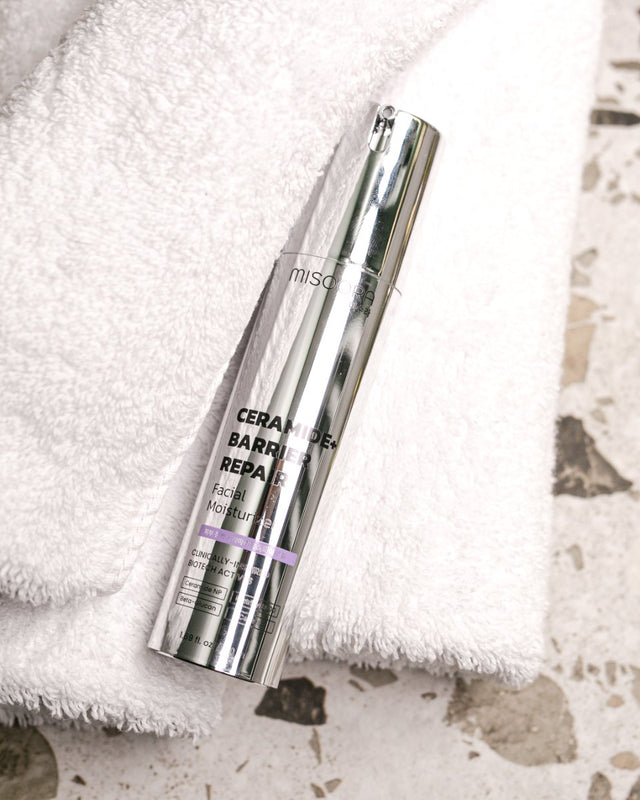
Ceramide+ Barrier Repair Moisturizer
A barrier cream for skin that has turned dry and tight after menopause. It leaves skin visibly smoother and more comfortable, morning and night, and works under sunscreen and over retinal.
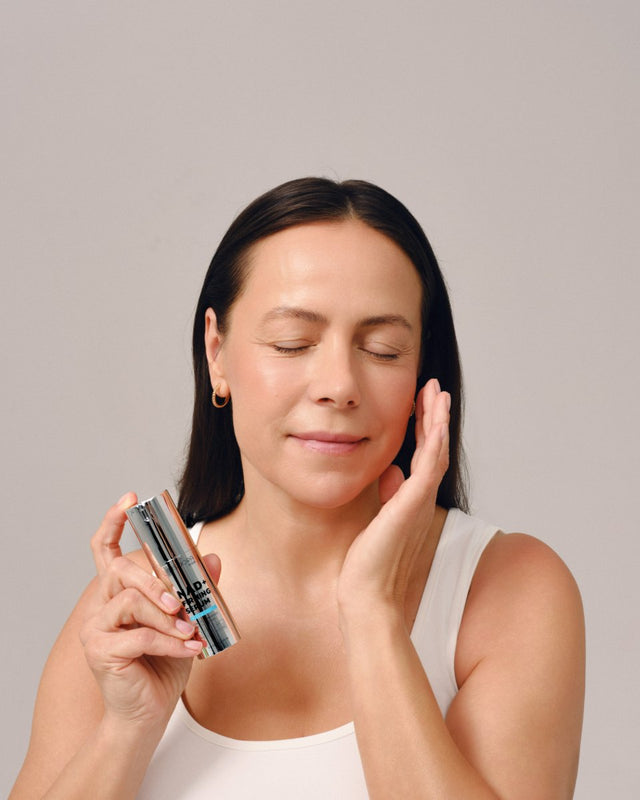
Shop the moisturizerMISOORA was made for skin after 50, though women of every age use it. Each serum states its key active and level: retinal 0.2%, NAD+ at 2,500 ppm and PDRN at 2,000 ppm. That is the kind of detail that lets you compare products on substance rather than on the word on the front.
07How to test a new product before you commit

Sensitive, thinner skin makes this step worth the patience, especially when you buy several new products at once during the sales. The AAD’s method:10
- Apply a quarter-sized amount to the underside of your arm or the bend of your elbow.
- Do it twice a day for 7 to 10 days, leaving it on as long as you normally would.
- If skin turns red, itchy or swollen, wash it off and don’t use the product again.
- Some tingling from retinoids or glycolic acid can be normal and temporary.
Then introduce one new product at a time, and give it at least 8 to 12 weeks before you judge it.
08When skin care isn’t enough
Creams change how skin looks and feels. They don’t change your hormones. At the American Society for Dermatologic Surgery meeting in November 2026, dermatologist Sabrina Fabi suggested that menopausal hormone therapy is worth discussing for skin, citing clinical trials linking hormone therapy to thicker skin.3 Whether it is right for you is a decision for you and your doctor, based on your whole health picture.
A good routine still matters alongside any treatment. Sunscreen, a retinoid and a moisturizer support your skin whatever else you choose.
Build the routine in one go. The sets bundle the steps in the order they work, cost less than buying each product separately, and make an easy gift this holiday season.


Key takeaways
- Skin loses about 30% of its collagen in the first five years of menopause, so a routine for mature skin makes sense.
- “Menopause” on a label has no legal meaning, and cosmetics don’t need FDA approval before sale.
- Doctors say most menopause skin products use the same ingredients as regular ones, sometimes at a higher price.
- Spend first on daily SPF 30+, a retinoid, a moisturizer and a gentle cleanser.
- Be wary of claims to balance hormones or regenerate cells; look for named actives and realistic wording.
- Patch test new products for 7 to 10 days and judge results after 8 to 12 weeks.
FAQFrequently asked questions
Do I need special skincare for menopause?
You need skincare that suits how your skin has changed: drier, thinner and more sensitive.4 That usually means a gentle cleanser, a richer moisturizer, a retinoid and daily sunscreen. It doesn’t have to be labeled for menopause.
Is menopause skincare worth the money?
Only if the ingredients are. Doctors say many products marketed for menopause contain the same ingredients as regular skin care.2 Compare the active ingredients and their levels, not the label.
What is the best ingredient for skin after menopause?
Daily broad-spectrum sunscreen and a retinoid have the strongest evidence for slowing and softening visible aging.89 Add a moisturizer with ceramides, hyaluronic acid or glycerin for dryness.4
Are menopause skin products FDA approved?
No. Cosmetics, except color additives, don’t need FDA approval before they go on the market.5 Brands must register facilities, list products and keep safety records under the 2022 law.7
Can skincare replace hormone therapy for skin?
No. Skin care works on how skin looks and feels; it doesn’t change hormone levels. Some studies link hormone therapy to thicker skin,3 so ask your doctor whether it fits your situation.
How long should I try a product before deciding it doesn’t work?
Give a new routine 8 to 12 weeks. Retinol studies measure results over months, such as 24 weeks in one trial.9 Take a photo in the same light on day one to compare.
Keep reading: How to read a skincare label after 50 · How long does skincare take to work after menopause?
References
- Salamon M. Menopause marketing: Hype vs. truth. Harvard Women’s Health Watch, Harvard Health Publishing. July 2023.
- Associated Press. Menopause products are having a hot minute, but doctors urge women to be wary of the marketing surge. Published by WTOP. April 2026.
- Grasso GM. Consider hormone therapy to improve menopause-related skin changes. Healio, reporting from the ASDS Annual Meeting. November 13, 2026. Survey: Fabi SG, et al. Dermatologic Surgery. 2026.
- American Academy of Dermatology. Caring for your skin in menopause. Updated November 2025.
- U.S. Food and Drug Administration. Is it a cosmetic, a drug, or both? (Or is it soap?). September 2024.
- U.S. Food and Drug Administration. Wrinkle treatments and other anti-aging products.
- U.S. Food and Drug Administration. Cosmetics & U.S. law. August 2026.
- American College of Physicians. Daily sunscreen use slows skin aging, even in middle age. June 4, 2013, on Hughes MC, Williams GM, Baker P, Green AC. Annals of Internal Medicine. 2013;158(11):781–790.
- Kafi R, et al. Improvement of naturally aged skin with vitamin A (retinol). Archives of Dermatology. 2007;143(5):606–612.
- American Academy of Dermatology. How to test skin care products. Updated August 2021.
Written by MISOORA Editorial. This article is for general information and is not medical advice. If you have a skin condition, use prescription treatments or are considering hormone therapy, talk to your doctor or dermatologist. Product results are cosmetic and vary from person to person.