

Gen X · The Science
You're not confused. Your brain just never got the memo that it isn't 1994 anymore. Here's why Gen X feels younger than its birth certificate, why the mirror doesn't always play along, and how to get the two back on speaking terms.

The too-long-didn't-read version
After 40, most people feel about 20% younger than they are2. That's not denial, it's normal, and people who feel younger even tend to live longer.3 The catch: Gen X skin is going through menopause6 and paying the bill for a childhood of baby oil.7 The fix is refreshingly boring: daily SPF, a retinoid, and a good moisturizer.910
01Wait, how old am I again?
A viral list recently told Gen X that someone born in 1966 is 40. Thousands of people read it and thought: yeah, sounds right.
It isn't. Pew Research Center puts Gen X at birth years 1965 to 1980.1 In 2026 that's ages 46 to 61. But here's the fun part: science says the list wasn't that far off from how you feel.
| Born in | Your actual age | The age you probably feel |
|---|---|---|
| 1965 | 61 | About 49 |
| 1970 | 56 | About 45 |
| 1975 | 51 | About 41 |
| 1980 | 46 | About 37 |
“Feel” age uses the 20% average from Rubin and Berntsen.2 Your mileage may vary.
02Why your brain is stuck at “about 40”
How much younger than their real age adults over 40 feel, on average. Study of 1,470 adults aged 20 to 97.2

Scientists call it subjective age: the age you are in your head.
Under 25, people feel older than they are (hello, fake ID). Past 25, it flips, and everyone starts feeling younger.2
After 40 the gap locks in at roughly a fifth of your age. A 50-year-old and a 70-year-old both run the same 20% discount, whatever their gender, income or education.2
The researchers' take: it's not denial. Your inner self is simply anchored to early adulthood. Basically, part of you is still waiting for the mixtape to finish recording.
03Feeling young isn't vanity. It's data.
Researchers in London asked 6,489 adults, average age about 66, one question: how old do you feel? The average answer was about 57.3
Then they followed them for roughly eight years. Look what happened.
To be clear, no face cream adds years to your life, and the researchers say the “why” still needs work (resilience and healthy habits are top suspects).3 But the message is great news: feeling young is a good sign, so protect it.
04So why won't the mirror agree?
You feel 45. Then the bathroom lighting says otherwise. Rude.
Faces are how other people guess age, and that guess means something: in a study of 1,826 Danish twins over 70, the twin who looked older in photos was more likely to die first.4
For Gen X women there's an extra plot twist. The average age of menopause in the US is 525, so nearly the whole generation is in it, near it or just past it. When estrogen drops, skin loses about 30% of its collagen in the first five years, then about 2% a year.6 Translation: your skin is aging on fast-forward while your brain is on pause.
Want the deep dive? Read our menopause skin care guide.
05Blame the baby oil
Quick Gen X flashback: baby oil at the pool, a sunburn every summer, “go play outside and come back when the streetlights come on.” Daily SPF? The FDA only first published a method for measuring it in 1978.8
of visible signs of facial aging were linked to UV in a study comparing sun-seekers and sun-avoiders aged 30 to 78.7
Sun mostly drives spots and uneven tone; wrinkles and texture come from sun plus time.7 The silver lining: the sun-made part is also the part that responds best to a good routine. And it's never too late to start daily SPF.10
06What actually helps
No cream rewinds the tape. But a few things are proven to help skin look closer to how you feel.
- SPF 30+, every single morningDermatologists' number one tip for preventing premature aging.10 Yes, even in winter. Yes, even if you're “just running errands.”
- A retinoid at nightThe most-studied fine-line fighter. Retinol smoothed fine wrinkles in people with an average age of 879, and retinal did the job with less irritation than prescription retinoic acid.11
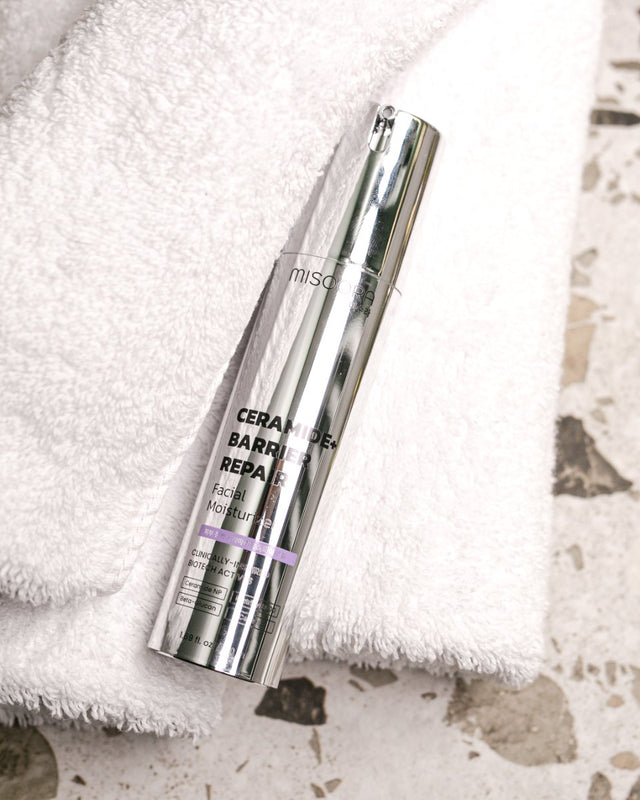
- Barrier careMenopausal skin gets thirsty fast. A gentle cleanser and a fragrance-free ceramide moisturizer keep it smooth and comfy.6
- Ditch anything that stingsStinging means irritation, and irritated skin looks older.10 Skincare should not feel like a dare.

Our pick for fine lines
Retinal 0.2% Barrier Serum
Retinaldehyde in a ceramide-supported base, made for thinner, more reactive skin. Start 2–3 nights a week for visibly smoother skin over time.
Shop Retinal 0.2%
Our pick for “I look tired” mornings
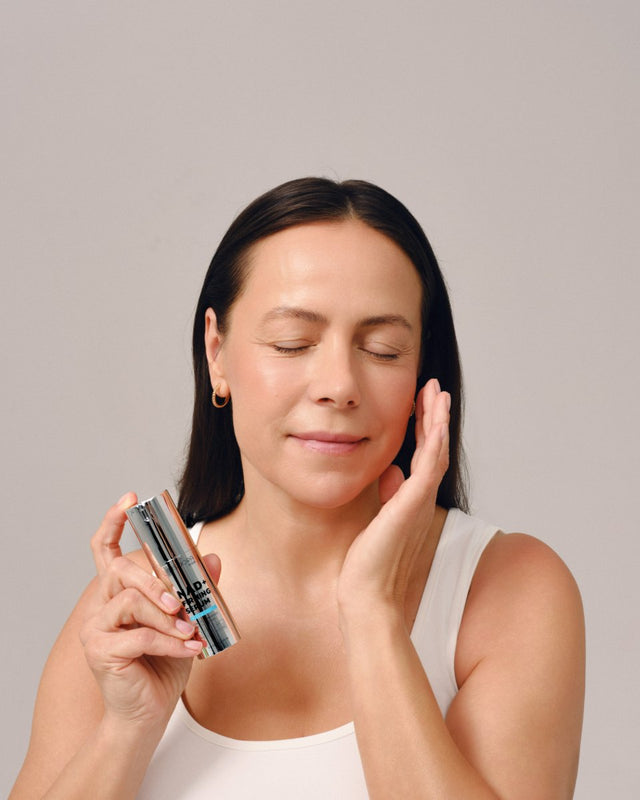
NAD+ Firming Serum
2,500 ppm NAD+ for when your skin looks more tired than you feel. Skin looks firmer and more rested. Curious? Read what makes an NAD+ serum work.
Shop NAD+ serum
Our pick for bounce and glow
PDRN Exosome EGF Skin Renewal Serum
2,000 ppm PDRN with exosomes, EGF and a peptide. Apply at night after retinal for skin that looks smoother and more cushioned by morning.
Shop PDRN serum07The Gen X routine: 5 steps, zero drama
You're the latchkey generation. You don't need a 12-step ritual; you need stuff that works. Two short routines, done most days, beat a perfect routine done never.


Morning
Cleanse, wake up, protect


Evening
Smooth, renew, seal


First time trying MISOORA?
Take 30% off your first order with code
GENX30One use per customer. Enter the code at checkout.


Key takeaways
- Gen X is 46 to 61 in 2026, but most people over 40 feel about 20% younger.12
- Feeling younger is linked to living longer. Keep that energy.3
- Menopause plus a baby-oil childhood make skin age faster than you feel.67
- SPF, a retinoid and barrier care are the proven way to close the gap.910
- New here? Code GENX30 takes 30% off your first order.
08FAQ
What years are Gen X?
Pew Research Center defines Gen X as people born from 1965 to 1980.1 That's ages 46 to 61 in 2026. Some researchers use slightly different cutoffs.
Is it normal to feel younger than my age?
Totally. Most adults past 25 feel younger than they are, and after 40 the gap settles at about 20% of real age.2
Is it too late to start sunscreen in my 50s?
Nope. Daily sun protection helps prevent further visible aging at any age.10
I've never used a retinoid. Can I start with retinal?
Yes. Start 2–3 nights a week, follow with moisturizer, and build up slowly if your skin stays comfortable. Retinal tends to be gentler than prescription retinoic acid.11
Are MISOORA products only for women over 50?
They were made with mature skin in mind, but women of all ages use them. If your skin is drier, thinner or more reactive than it used to be, they're a great fit.
Keep reading: Perimenopause skin care guide · Dark spots after menopause
References
- Dimock M. Defining generations: Where Millennials end and Generation Z begins. Pew Research Center. 2019.
- Rubin DC, Berntsen D. People over forty feel 20% younger than their age: subjective age across the lifespan. Psychonomic Bulletin & Review. 2006;13(5):776–780.
- Rippon I, Steptoe A. Feeling old vs being old: associations between self-perceived age and mortality. JAMA Internal Medicine. 2015;175(2):307–309. Summary: UCL News.
- Christensen K, et al. Perceived age as clinically useful biomarker of ageing: cohort study. BMJ. 2009;339:b5262.
- National Institute on Aging. What is menopause?
- American Academy of Dermatology. Skin care during menopause.
- Flament F, et al. Effect of the sun on visible clinical signs of aging in Caucasian skin. Clinical, Cosmetic and Investigational Dermatology. 2013;6:221–232.
- Schalka S, Reis VMS. Sun protection factor: meaning and controversies. Anais Brasileiros de Dermatologia. 2011;86(3):507–515.
- Kafi R, et al. Improvement of naturally aged skin with vitamin A (retinol). Archives of Dermatology. 2007;143(5):606–612.
- American Academy of Dermatology. 11 ways to reduce premature skin aging.
- Creidi P, et al. Profilometric evaluation of photodamage after topical retinaldehyde and retinoic acid treatment. Journal of the American Academy of Dermatology. 1998;39(6):960–965.
Written by MISOORA Editorial. This article is for general information and is not medical advice. Product results are cosmetic and vary from person to person. If you have a skin condition that does not improve, see a board-certified dermatologist.