

Menopause & Mature Skin · Evidence Check
Face yoga, gua sha stones and jade rollers are everywhere this gift season, and the promises are big: a lifted jaw, firmer cheeks, a younger face in minutes a day. We read the actual studies to see what facial exercise and massage can do for skin after menopause, what they can’t, and how to get more out of the time you spend on them.

The short answer
Face yoga has some real but modest evidence. In the best-known study, 16 women aged 40 to 65 who did 30 minutes of facial exercises most days for 20 weeks had visibly fuller cheeks, and doctors judged them to look about 2.7 years younger.12 There was no comparison group, and lines on the forehead, around the eyes and along the jaw did not change significantly.1 Gua sha and facial rollers have one small trial showing changes in muscle tone and skin elasticity after 8 weeks.45 None of these tools can replace the collagen your skin loses after menopause.7 Think of massage as a pleasant extra on top of a routine that does the heavy lifting: a retinoid at night, a firming serum, a rich moisturizer and daily sunscreen.910
01Why your face changes shape after menopause
At a dermatologic surgery meeting this month, dermatologist Sabrina Fabi reminded colleagues that women lose about 30% of their skin collagen in the first five years after menopause, then roughly 2% a year after that.7 An older study measured the same slow slide: skin collagen and skin thickness both fell by about 1% to 2% a year after menopause.8
Less collagen means thinner, less springy skin, and that shows first where the face used to look full: the cheeks, the area under the eyes and the jawline. That is exactly the territory face yoga and massage tools promise to fix, so it is worth asking what they actually reach. Skin sits on top of fat and muscle. Exercise works on the muscle. Massage mostly moves skin and the tissue just below it. Neither one puts collagen back into the skin itself.
The share of skin collagen women lose in the first five years after menopause, according to a dermatologist’s presentation at this month’s American Society for Dermatologic Surgery meeting.7
02Does face yoga work? What the 20-week study found
The study most face yoga programs point to was published in JAMA Dermatology in 2018 by a team at Northwestern University.1 Twenty-seven women aged 40 to 65 enrolled, and 16 finished. After two 90-minute training sessions, they did 32 facial exercises at home for 30 minutes a day for 8 weeks, then every other day until week 20.12
Two dermatologists who did not know which photos came from which time point rated the women’s faces at the start and at the end.1 Here is what changed:
- Upper cheeks looked fuller. The average score improved from 1.8 to 1.1 on a 0 to 4 scale, where 0 means full.1
- Lower cheeks looked fuller too, from 1.6 to 0.9.1
- Estimated age dropped. Raters guessed an average age of 50.8 at the start, 49.6 at week 8 and 48.1 at week 20.1 The lead author called it almost a three-year decrease in age appearance over 20 weeks.2
That is a genuinely encouraging result for something free. It also comes with real limits. The study was small, there was no control group doing nothing, 11 of the 27 women dropped out, and one co-author founded the face yoga company that supplied the exercises.1 Scores for the forehead, frown lines, crow’s feet, smile lines, jawline and neck did not change significantly.1 The authors themselves called it a pilot study and said larger trials are needed.12
03What newer face yoga research adds
A 2025 study from Turkey followed 12 women aged 45 to 55 through an 8-week program: two supervised sessions and five home sessions a week, about 30 minutes each.3 Instead of rating photos, the researchers measured the muscles themselves with a handheld device that records tone, stiffness and elasticity.3
- Forehead, frown, eye and mouth muscles became less tense and less stiff.3
- The cheek muscle and the muscle under the chin gained tone and stiffness.3
- Elasticity improved in all six muscles measured.3
In plain terms, the muscles you tense when you frown or squint relaxed, while the ones that support the cheeks and under-chin area got a workout. It fits the 2018 result. But with 12 women, no control group and no photos, it tells us the muscles changed, not whether anyone looked different.3
04Do gua sha and facial rollers work?
Gua sha (a flat stone scraped gently across the skin) and facial rollers have far less research behind them than their popularity suggests. The best evidence so far is a 2025 randomized trial of 34 women aged 20 to 50.4 Each group used either a gua sha tool or a roller with facial oil for 10 minutes, five times a week, for 8 weeks.45
- Gua sha lowered facial muscle tone and stiffness, a sign of more relaxed muscles. It did not change skin elasticity.5
- The roller improved skin elasticity by about 8.6%, but did not change muscle tone.5
- Both produced measurable changes in facial contour on 3D scans.5
Two caveats matter for women over 50. The participants were younger, and the trial was small, so nobody knows yet how well the results hold for thinner, post-menopausal skin. And the much-quoted “boost in circulation” comes from a 2007 pilot study on the back, not the face: firm gua sha strokes raised blood flow at the surface about fourfold for the first 7.5 minutes, and it stayed above baseline for the 25 minutes measured.6 That explains the warm, rosy look right after a session. It does not mean lasting change.

Start with clean skin and clean tools
A massage presses whatever is on your skin into it, and drags whatever is on your stone or roller across your face. Wash your face first with a gentle, low-foam cleanser, and wash your tool with soap and water after every use.
Our Centella Ceramide Amino Acid Cleanser cleans without the tight, squeaky feeling, so skin is comfortable before you add serum and start the strokes.
05Face yoga myths, checked
“Face yoga works like a facelift.”
In the 20-week study, the cheeks looked fuller, but the jawline and neck scores did not change significantly.1 The American Academy of Dermatology notes that truly lifting sagging skin takes in-office treatment.11
“Gua sha boosts circulation.”
It does, briefly. In a pilot study on the back, surface blood flow rose about fourfold for 7.5 minutes after treatment.6 That is a short-term flush, not a lasting change in the skin.
“Making faces all day will give you more wrinkles.”
Over 20 weeks of daily exercises, the forehead, frown-line and crow’s feet scores did not get significantly worse.1 The 2025 study even found the frown and forehead muscles became less tense.3 Long-term data are missing, so keep the movements slow and controlled.
06What facial massage can’t do
Exercise and massage work on muscle and on how skin moves. They don’t give skin new collagen, and they don’t protect it from the UV light that keeps breaking collagen down. Ingredients with good evidence do that work. In a 24-week study of people with an average age of 87, a 0.4% retinol lotion visibly reduced fine wrinkles compared with a plain lotion, and skin samples showed more procollagen.9
| Face yoga | Gua sha or roller | Retinoid + daily SPF | |
|---|---|---|---|
| Main target | Face yoga: Facial muscles13 | Gua sha or roller: Muscle tone, skin elasticity5 | Retinoid + SPF: Collagen and fine lines9 |
| Best evidence | Face yoga: Small studies, no control group13 | Gua sha or roller: One small trial in women 20 to 504 | Retinoid + SPF: Controlled studies, including in very old skin9 |
| Time per day | Face yoga: About 30 minutes1 | Gua sha or roller: About 10 minutes4 | Retinoid + SPF: Under 2 minutes |
| Best use | Face yoga: Fuller-looking cheeks, if you enjoy it | Gua sha or roller: A relaxing way to apply products | Retinoid + SPF: The core of any mature-skin routine |

Our pick for the collagen side
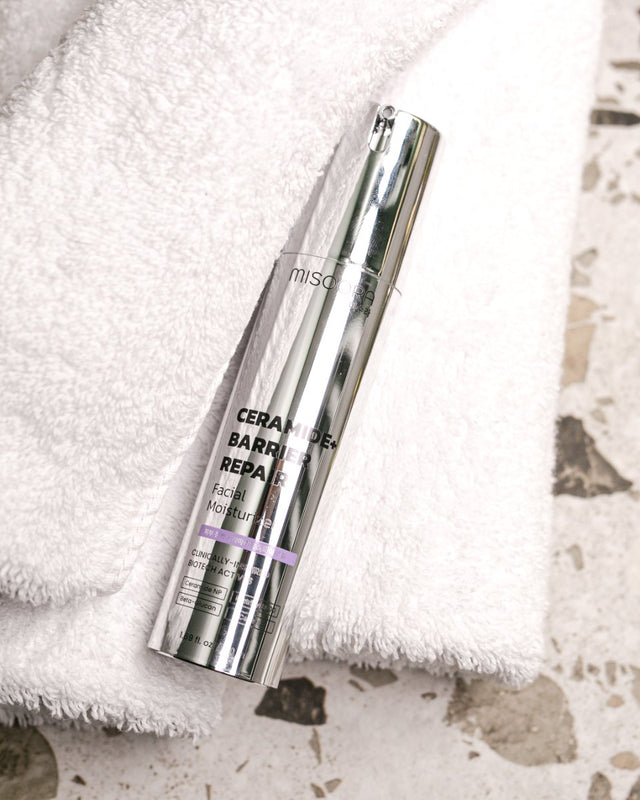
Retinal 0.2% Barrier Serum
Retinal visibly smooths fine lines and crepey texture, buffered with ceramides for drier skin after 50. Use it first in your evening routine, on dry skin.
Shop the retinal serum07A 5-minute face massage routine for mature skin
You don’t need 30 minutes to make massage worthwhile. Five slow minutes, done while you apply products you already use, turns it into a calming ritual and helps creams spread evenly. Skin gets thinner after menopause,8 so the rule is light pressure: you are gliding, not scraping.
- CleanseUse a gentle cleanser and pat skin almost dry.
- Add slipApply a serum, then a generous layer of moisturizer, so fingers or a tool glide without tugging. Dry skin plus pressure means friction.
- Massage the five zonesFive or six slow strokes per zone, following the map above. Keep the tool almost flat against the skin.
- Know when to skipAvoid broken, sunburned or inflamed skin, active breakouts and rosacea flares. If you bruise easily or take blood thinners, use fingertips only. If you have had fillers or other injectables, ask your provider first.
- Finish with protectionIn the morning, follow with broad-spectrum SPF 30 or higher.10
Morning or night?
Mornings are the easiest time: your firming serum and moisturizer double as the glide. In the evening, apply retinal first on dry skin, then PDRN serum, then moisturizer, and massage only over the moisturizer layer. On nights your skin feels sensitive from a retinoid, skip the tool.
A rich ceramide moisturizer is the best glide for mature skin: it cushions the strokes and leaves a protective layer behind instead of evaporating like water.


Our pick for morning massage
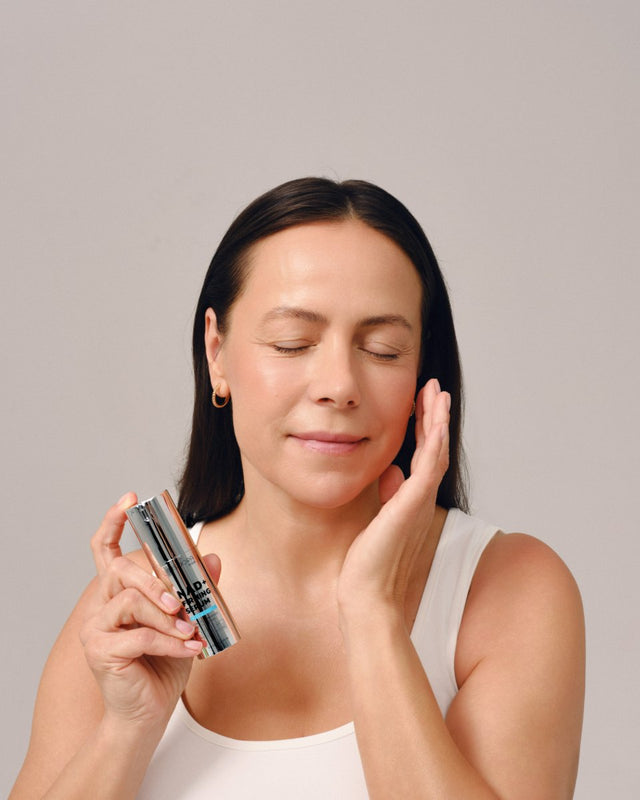
NAD+ Firming Serum
A lightweight serum that supports the look of firmer, more resilient skin. Press it in after cleansing, follow with moisturizer, then start your strokes.
Shop the NAD+ serumMorning
Massage day

Evening
Renew

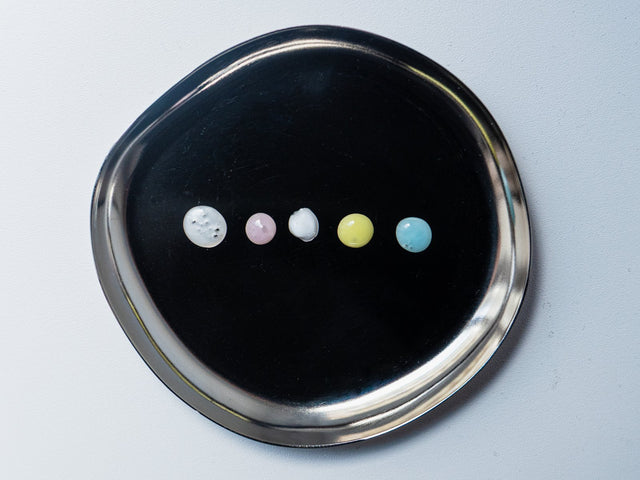
Our PDRN Exosome EGF Night Renewal Serum pairs 2,000 ppm PDRN with exosomes, EGF and peptide to support the look of bouncier, smoother skin overnight. Layer it right after retinal, then seal both in with moisturizer. See the PDRN serum.
08How long before you see a difference?
In the 2018 study, raters already guessed a younger age at week 8, and the change grew by week 20.1 The 2025 face yoga and gua sha studies measured results at 8 weeks.34 The retinol study in older adults ran for 24 weeks.9 So whatever you choose, plan on two to six months of steady use before you judge it. Taking a photo in the same light every four weeks makes it easier to see real change.
Get the whole routine in one box. The sets cost less than buying each product separately, and they make an easy holiday gift.


Key takeaways
- In a small 20-week study, daily face yoga made cheeks look fuller and faces look about 2.7 years younger to raters.
- The forehead, eye area, jawline and neck did not change significantly, and the study had no control group.
- Gua sha and rollers changed muscle tone and skin elasticity in one small trial of women aged 20 to 50.
- The gua sha glow is a short-term rise in blood flow, not a lasting change.
- Massage can’t replace collagen. Pair it with a retinoid at night, a firming serum, a rich moisturizer and daily SPF.
FAQFrequently asked questions
Does face yoga really work?
There is some evidence. In the best-known study, women aged 40 to 65 who exercised 30 minutes a day, then every other day, for 20 weeks had fuller-looking cheeks and were rated as looking younger.1 The study was small and had no control group, so treat it as promising rather than proven.
Can face yoga get rid of jowls or a double chin?
The 20-week study did not find significant changes in the jawline or neck.1 The AAD notes that lifting sagging skin takes in-office treatment.11
Is gua sha good for skin after menopause?
Used gently, it can be a relaxing way to apply products, and a small trial found it relaxed facial muscles.5 Skin is thinner after menopause,8 so keep pressure light, keep the stone almost flat, and stop if you see redness that lasts or tiny red dots.
Should I use oil or serum for facial massage?
Anything that lets the tool glide works. For mature, dry skin, a serum followed by a rich moisturizer gives slip and leaves a protective layer behind. Avoid massaging over a fresh retinoid on nights your skin feels sensitive.
How often should I do facial massage?
Studies used 10 minutes five times a week for gua sha and rollers4 and 30 minutes a day for face yoga.1 A shorter daily routine is easier to keep, and consistency matters more than length.
Can I do face yoga after Botox or fillers?
Ask the clinician who treated you before you massage or press on the treated areas, and follow their timing.
Keep reading: Why skin sags after menopause, and what creams can and can’t do · Do LED face masks work after menopause?
References
- Alam M, Walter AJ, Geisler A, et al. Association of facial exercise with the appearance of aging. JAMA Dermatology. 2018;154(3):365–367.
- Northwestern University. Facial exercises help middle-aged women appear more youthful. Northwestern Now. January 3, 2018.
- Güzel HÇ, Keçelioğlu Ş, Kurtoğlu A, Elkholi SM. Effect of intensive face yoga on facial muscles tonus, stiffness, and elasticity in middle-aged women: a pre-experimental clinical trial. Medicina. 2025;61(5):840.
- Ahn SH, Hwang UJ, Han HS, et al. Comparative effects of facial roller and gua sha massage on facial contour, muscle tone, and skin elasticity: randomized controlled trial. Journal of Cosmetic Dermatology. 2025;24(6):e70236.
- Bosslett M. At-home facial massage methods clinically proven to improve skin elasticity, tone, and contour. (report on Ahn et al. 2025). Dermatology Times. June 13, 2025.
- Nielsen A, Knoblauch NTM, Dobos GJ, Michalsen A, Kaptchuk TJ. The effect of Gua Sha treatment on the microcirculation of surface tissue: a pilot study in healthy subjects. Explore. 2007;3(5):456–466.
- Grasso GM. Consider hormone therapy to improve menopause-related skin changes. (report on a presentation by Sabrina G. Fabi, MD, at the American Society for Dermatologic Surgery Annual Meeting). Healio Dermatology. November 13, 2026.
- Brincat M, Kabalan S, Studd JW, et al. A study of the decrease of skin collagen content, skin thickness, and bone mass in the postmenopausal woman. Obstetrics & Gynecology. 1987;70(6):840–845.
- Kafi R, Kwak HSR, Schumacher WE, et al. Improvement of naturally aged skin with vitamin A (retinol). Archives of Dermatology. 2007;143(5):606–612.
- American Academy of Dermatology. Retinoid or retinol?
- American Academy of Dermatology. Firm sagging skin.
Written by MISOORA Editorial. This article is for general information and is not medical advice. If you have a skin condition, bruise easily, take blood thinners or have had cosmetic injections, talk to your dermatologist before starting facial massage or exercises. Product results are cosmetic and vary from person to person.