

Menopause & Mature Skin · Devices Guide
LED face masks are everywhere this holiday season, and the ads promise firmer, smoother skin in minutes a day. Here is what the research actually shows for skin after menopause, how to use one safely, and why a mask works best as one step in a routine, not the whole routine.

The short answer
Partly. Red and near-infrared light have small controlled studies behind them: in one, wrinkles measured up to 36% lower after eight sessions,3 and dermatologists describe the effect as subtle to noticeable.1 Results take months of regular use, home masks are weaker than clinic devices, and not everyone responds.12 Light cannot replace what estrogen loss takes from skin after menopause, so the best results come from pairing a mask with proven topicals: a retinoid, a repair serum, a barrier moisturizer and daily SPF.
01What does an LED face mask actually do?
An LED mask shines low-energy visible and near-infrared light onto the skin. It does not heat or wound the skin the way a laser does. The idea, called photobiomodulation, is that red and near-infrared light are absorbed by the mitochondria, the energy centers of skin cells, which may calm inflammation and support collagen production.25
Dermatologists use red light mostly as a complementary treatment, alongside creams, microneedling or peels, for fine lines, rough texture, redness, dark spots and loose skin.1 Unlike UV light, red light has not been found to cause skin cancer.1
02Do LED masks work for wrinkles?
There is real evidence, but it is smaller than the marketing suggests. Three findings are worth knowing:
- A placebo-controlled trial. In 76 people with facial wrinkles, red (633 nm), near-infrared (830 nm) or both, twice a week for four weeks, reduced measured wrinkles by up to 36% and raised skin elasticity by up to 19%. A sham light did not. Biopsies showed more collagen and elastic fibers.3
- A larger randomized study. Of 136 adults aged 27 to 79, those who had 30 red-light sessions saw smoother skin and higher collagen density on ultrasound. Blinded reviewers rated wrinkles better in about seven in ten treated people, against 4% of untreated controls.4 The device maker funded the study, and the control group was not randomized.
- Real-world satisfaction. In one study of 90 patients given eight LED treatments over four weeks, more than 90% noticed some improvement.1
The catch: these studies used clinic-grade panels, and many at-home devices deliver weaker light.2 The American Academy of Dermatology notes that studies use different devices, doses and designs, so results cannot be compared directly, and that it takes time to see results and not everyone sees them.1
03Why is skin after menopause a special case?

Most LED studies enrolled adults of many ages. After menopause, the starting point is different. Skin collagen falls by about 30% in the first five years after menopause, then by roughly 2.1% a year.7 Skin also tends to get drier and thinner.9
Light may encourage the cells that make collagen, but it cannot replace the hormone signal that kept them busy. That is why a mask on its own often feels underwhelming at 55. The lines and dryness come from several sources at once, so they respond best to several tools at once.
Approximate drop in skin collagen during the first five years after menopause.7 No single device or cream undoes that on its own.
04Red, blue or near-infrared: which light do you need?
Most masks offer several colors. The longer the wavelength, the deeper the light travels into skin.5 For visible aging, red and near-infrared are the colors with the evidence behind them.34 Blue light is aimed at acne: at-home red and blue devices reduced breakouts in a 2025 review of six studies.6
If your main concern is fine lines and firmness, look for a mask that lists its red and near-infrared wavelengths. If breakouts are part of your menopause skin story, a blue setting can help with those, but it will not do much for wrinkles.
05How often to use one, and when you will see results
Consistency matters more than session length. Harvard Health suggests using a device multiple times a week for four to six months.2 In the larger study above, 30 sessions at two a week took about four months.4 Follow your device's directions for session time; more is not better, and the ideal dose has not been established.2
Gains also fade if you stop. Skin keeps aging, so follow-up sessions are needed to keep results.1 Taking a phone photo in the same light every four weeks is the easiest way to judge whether your mask is worth the time.
06Are LED masks safe?
For most people, short-term use appears safe. The usual side effects are mild, such as temporary redness or irritation.1 A few rules keep it that way:
- Protect your eyes. If the directions call for goggles, wear them every time, and do not swap in sunglasses.1 In 2019, Neutrogena recalled its light therapy acne mask over a theoretical risk of eye injury for people with certain eye conditions or on medicines that make eyes more light-sensitive.8
- Check your medicines and conditions. Light-sensitive conditions such as lupus, and medicines that increase light sensitivity, are reasons to skip red light or ask first.12
- Darker skin tones: start low. People with darker skin may be more sensitive to visible light and more prone to dark spots, so talk with a dermatologist first.1
- Read the claim carefully. Look for FDA-cleared or 510(k)-cleared. Clearance means the device is considered safe, not that it works well, and phrases like FDA approved or FDA certified mean nothing for these devices.1
07Where a mask fits in your routine
Think of the mask as a signal and your skincare as the supply. Light may nudge skin cells; topicals deliver the ingredients and protect the barrier that menopause weakens. Dermatologists already treat red light as a complement to creams, not a replacement.1
Use the mask on clean, dry, makeup-free skin unless your device says otherwise, then apply your serums afterward so nothing sits between the light and your skin.
Morning
Protect what the night routine builds


Evening
Mask first, then your serums


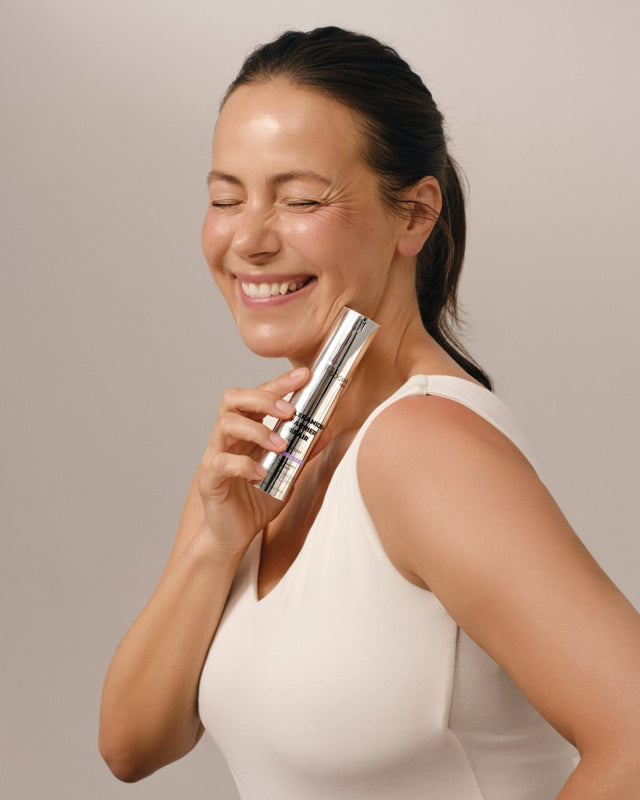
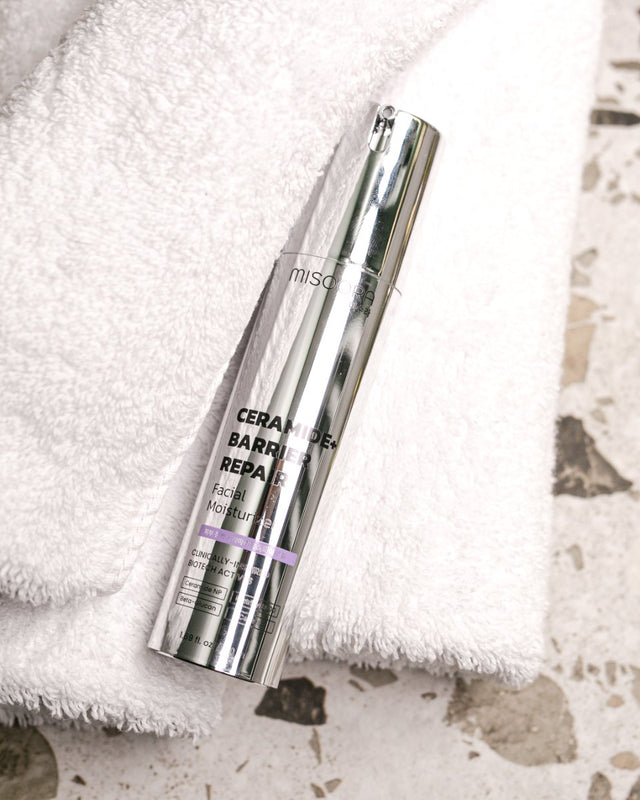
Our pick to pair with red light
Retinal 0.2% Barrier Serum
Retinal is one conversion step closer to the active form than retinol. It visibly smooths fine lines and uneven texture, in a formula built for drier, more sensitive skin after 50. Use it after your mask, on dry skin.
Shop the retinal serumOn nights you use the mask, keep the rest of the routine calm. If your skin feels warm, tight or tingly afterward, skip the retinoid that night and go straight to a soothing serum and moisturizer.
Daily sunscreen protects the collagen you still have, and dermatologists recommend it every day after menopause.9 A mask you use three nights a week cannot make up for sunscreen you skip.
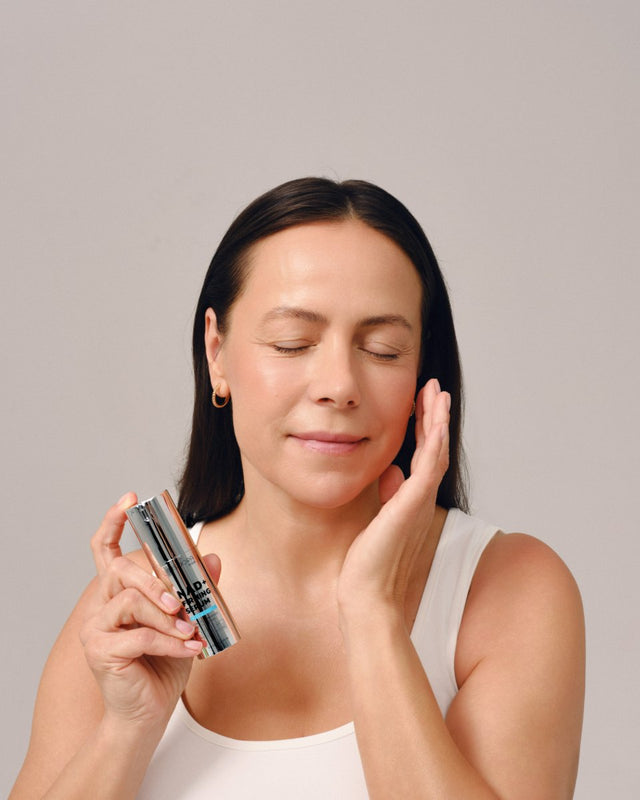
Our pick for the step after the mask
PDRN Exosome EGF Skin Renewal Serum
2,000 ppm PDRN with exosomes, EGF and peptides to support visibly smoother, more resilient-looking skin. Layer it after retinal and before moisturizer.
Shop the PDRN serum


08How to choose one (or gift one)

LED masks show up on plenty of holiday gift lists, and devices often cost from about $100 to more than $1,000.1 That is a lot to spend on something that only works if it gets used, several times a week, for months.
If you are buying one for yourself or someone else, the five checks below separate a useful device from an expensive drawer item.
| Check | Why it matters |
|---|---|
| FDA-cleared for wrinkles | Look for FDA cleared or 510(k) cleared for the concern you want to treat. Ignore FDA approved or certified.1 |
| Listed wavelengths | Red around 630 to 660 nm and near-infrared around 830 nm match the studied settings.34 A brand that hides its wavelengths is a red flag. |
| Eye protection | Goggles or shielded eye openings, and clear directions on when to use them.1 |
| A routine she will keep | A comfortable fit and short sessions make it easier to keep up the months of regular use the evidence needs.2 |
| Return window | Not everyone responds,1 so a generous return policy protects a big purchase. |
If a mask is not in the budget, a complete routine does more for the look of lines and dryness after menopause than a device used on its own. Start with a gentle cleanser, a retinoid, a repair serum, a ceramide moisturizer and SPF, and add light later if you want an extra step.
Key takeaways
- Red and near-infrared LED light have small controlled studies showing softer-looking wrinkles and smoother texture.
- Results are subtle to noticeable, need months of regular use and fade when you stop. Not everyone responds.
- Blue light is for breakouts, not wrinkles.
- After menopause, collagen loss is steep, so light works best as one step in a full routine.
- Protect your eyes, check medicines that raise light sensitivity, and buy an FDA-cleared device with listed wavelengths.
- Use the mask on clean, dry skin, then retinal, a repair serum and a ceramide moisturizer. SPF every morning.
FAQFrequently asked questions
Do LED face masks really work for women over 50?
They can help a little. Studies of red and near-infrared light show softer-looking wrinkles and smoother texture after several weeks of regular sessions,34 but dermatologists describe the effect as subtle to noticeable, and not everyone sees results.1
Can an LED mask replace my retinol or retinal?
No. Dermatologists use red light alongside topical treatments, not instead of them.1 Keep your retinoid and use the mask as an extra step on clean skin before it.
How many minutes a day should I use an LED mask?
Follow your device's directions. Studies used sessions two times a week, and the ideal dose is not yet known.24 Longer or more frequent sessions are not proven to work better.
Should I put serum on before or after an LED mask?
After, unless your device says otherwise. Use the mask on clean, dry, makeup-free skin, then apply your serums and moisturizer.
Is red light therapy safe if I take hormone therapy?
Hormone therapy is not listed as a reason to avoid red light. Medicines that increase light sensitivity and conditions such as lupus are, so check your medicine labels and ask your doctor if you are unsure.12
Can LED light cause dark spots?
It can in some people. Those with darker skin tones may be more sensitive to visible light and more prone to hyperpigmentation, so a dermatologist visit before starting is worth it.1
Keep reading: How long does skincare take to work after menopause? · Retinal vs retinol vs tretinoin after 50
References
- American Academy of Dermatology. Is red light therapy right for your skin? Updated September 13, 2024.
- Harvard Health Publishing. Red light therapy for skin care. October 21, 2025.
- Lee SY, Park KH, Choi JW, et al. A prospective, randomized, placebo-controlled, double-blinded, and split-face clinical study on LED phototherapy for skin rejuvenation. Journal of Photochemistry and Photobiology B. 2007;88(1):51–67.
- Wunsch A, Matuschka K. A controlled trial to determine the efficacy of red and near-infrared light treatment in patient satisfaction, reduction of fine lines, wrinkles, skin roughness, and intradermal collagen density increase. Photomedicine and Laser Surgery. 2014;32(2):93–100.
- Avci P, Gupta A, Sadasivam M, et al. Low-level laser (light) therapy (LLLT) in skin: stimulating, healing, restoring. Seminars in Cutaneous Medicine and Surgery. 2013;32(1):41–52.
- Ershadi S, Barbieri JS, et al. Efficacy of at-home light emitting diode devices for the treatment of acne vulgaris: a systematic review and meta-analysis. JAMA Dermatology. 2025. Summary: Mass General Brigham.
- Thornton MJ. Estrogens and aging skin. Dermato-Endocrinology. 2013;5(2):264–270.
- Association of Optometrists. Eye injury risk prompts recall of Neutrogena light therapy acne mask. July 22, 2019.
- American Academy of Dermatology. Skin care during menopause.
Written by MISOORA Editorial. This article is for general information and is not medical advice. Product results are cosmetic and vary from person to person.