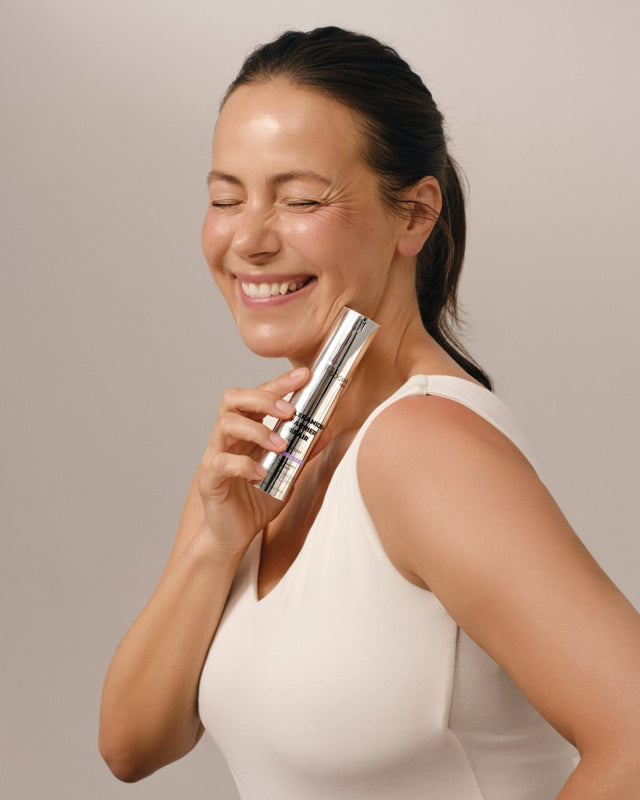


Menopause & Mature Skin · Eye-Area Guide
If your eyes started looking tired in your late 40s or 50s, even after a decent night, you are not imagining it. Here is why under-eye bags, dark circles and hollows show up around menopause, how to tell which one you have, and the gentle eye-area routine that helps.

The short answer
The skin under your eyes is one of the thinnest on the body, so it shows changes early.3 After menopause, skin loses nearly a third of its collagen in the first five years,4 the tissue that holds fat in place weakens,1 and sleep often gets worse.5 The result: puffiness, darker circles and hollows. What helps: knowing which one you have, cool compresses and less salt for morning puffiness, daily sunscreen and no rubbing for dark circles, and a gentle retinal used along the orbital bone with a rich moisturizer on top.127
01Why do my eyes look so tired after menopause?
The skin of the lower eyelid is very thin and has little or no fat beneath it, so whatever sits underneath, from blood vessels to the muscle that closes the eye, shows through easily.3 That makes the eye area the first place many women notice that their skin is changing.
Menopause speeds those changes up. Collagen is what keeps skin thick and springy, and estrogen helps maintain it. After the final period, skin loses nearly a third of its collagen in the first five years, with an average decline of about 2.1% a year over the 15 years after menopause.4 Skin also tends to get drier.9 On thin eyelid skin, less collagen and less moisture show up as fine lines, crepey texture and a darker, more hollow look.
In a 2026 survey of more than 4,300 women aged 45 to 60 in nine countries, 59% reported lines and wrinkles on the face during menopause and 56% reported dryness. Over half said they only learned about these skin changes after they started.8
Two other things change at the same age: the fat pads and bone around the eye lose volume, which deepens shadows, and sleep often gets lighter and more broken.35 Each one calls for a different fix, which is why the first step is working out what you are actually looking at.
02Is it bags, dark circles or hollows?
Most of us call everything under the eye a dark circle. In fact there are four common patterns, and many women over 50 have more than one.123 A simple test: look in a mirror in daylight, then tilt your face up toward the light. Shadows from hollows fade when light hits them directly; pigment stays the same.
Which under-eye concern is it?
03Why do under-eye bags get worse in your 50s?
With age, the tissues and muscles that support the eyelids weaken. Fat that normally sits around the eye can then move down into the lower lids, and fluid can collect beneath the eyes, which is why they look puffiest when you wake up.1
Mayo Clinic lists the factors that make bags worse: older age, fluid retention (especially after a salty meal), lack of sleep, allergies, smoking and family history.1 Fall allergies and long nights with the heating on can add to it.
What helps morning puffiness

Puffiness that comes and goes responds well to these habits. Bags that are there all day, every day, are mostly fat and loose tissue. Skincare can make the skin over them look smoother, but it cannot move fat back. If they bother you, a board-certified dermatologist or oculoplastic surgeon can talk you through in-office options.
04What causes dark circles in mature skin?
Dark circles have several causes, and they often stack up after 50. Mayo Clinic names fatigue, eczema and contact dermatitis, genetics, rubbing or scratching the eyes, sun exposure, pigment changes such as melasma, and skin changes from aging. Smoking, heavy drinking and stress can add to them.2
The habits that help most are the unglamorous ones: a broad-spectrum sunscreen with SPF 30 or higher every day, reapplied every two hours outdoors; enough sleep; less alcohol; and no rubbing.2 If you have eczema or melasma, treating it with your dermatologist is part of fading the circles.2
05Can menopause sleep problems show around your eyes?
Yes, and quickly. In a Swedish study, faces photographed after 31 hours without sleep were rated by 40 observers as having more hanging eyelids, more swollen eyes, darker circles under the eyes and more fine lines than the same faces after a normal night.6
In the Study of Women's Health Across the Nation (SWAN), 37.7% of 12,603 women aged 40 to 55 reported trouble sleeping in the previous two weeks. Problems were most common in late perimenopause.5
Night sweats are a big part of it. Women with hot flashes or night sweats on 6 to 14 nights in two weeks were roughly two to three times as likely to report disturbed sleep, and poor sleep in turn makes those symptoms feel worse.5 If night sweats wake you most nights, talk to your doctor: better sleep will do more for your eyes than any cream. Our guide to night sweats, poor sleep and your skin has a full evening routine.
06Can you use retinal under your eyes?
Yes, if you go slowly. Retinoids, the vitamin A family, are among the most studied topical options for the eye area: a dermatology review describes them as supporting better-organized collagen and less visible pigment under the eyes.3 In a 12-week study, 16 women who used a retinoid eye cream every night saw these average improvements:7
12 weeks of a nightly retinoid eye cream
It was a small, company-sponsored study without a control group, so read it as encouraging, not definitive.7 Still, the pattern matches what we see with gentle retinoids: the biggest early change is in dryness and texture, with fine lines following over months.

How to use retinal near the eyes
- Start two or three nights a week, on dry skin, then build up as your skin allows.
- Stay on the bone. Use a rice-grain amount for both eyes and dot it along the orbital bone, the ridge you can feel under the eye. Keep it off the eyelids and lash line.
- Buffer it. Follow with a ceramide moisturizer every time.
- Back off if it stings, flakes or turns pink, and skip it before an important day.

Our pick for smoother-looking eye-area skin
Retinal 0.2% Barrier Serum
Retinaldehyde at 0.2%, buffered with ceramide NP, centella, beta-glucan and bisabolol for mature, sensitive skin. Fragrance-free. Use it on the face and along the orbital bone to help crepey, dry-looking skin look smoother and more even.
Shop Retinal 0.2%Want to compare options? Read retinal vs retinol vs tretinoin after 50.
07How to apply skincare around the eyes
Rubbing is one of the listed causes of dark circles,2 and thin skin does not need pressure to absorb a product. A few small changes make a visible difference:
- Remove makeup without scrubbingLet a gentle cleanser sit on closed eyes for a few seconds, then rinse. No tugging with cotton pads.
- Use your ring fingerIt has the lightest touch. Tap products on, do not sweep or drag.
- Layer thin to thickRetinal first, then PDRN serum, then moisturizer. Wait a minute between steps.
- Moisturize the whole areaBring your moisturizer up to the orbital bone and out to the crow’s feet, morning and night.
- Protect it by daySunscreen goes all the way to the orbital bone, since sun exposure deepens dark circles.2

Our pick for rested-looking skin overnight
PDRN Exosome EGF Night Renewal Serum
2,000 ppm PDRN with exosomes, EGF and peptide, plus panthenol. A light, fragrance-free serum that layers after retinal and before moisturizer, so skin around the eyes looks smoother, plumper and more rested by morning.
Shop PDRN serum
Our pick for dry, crepey under-eyes
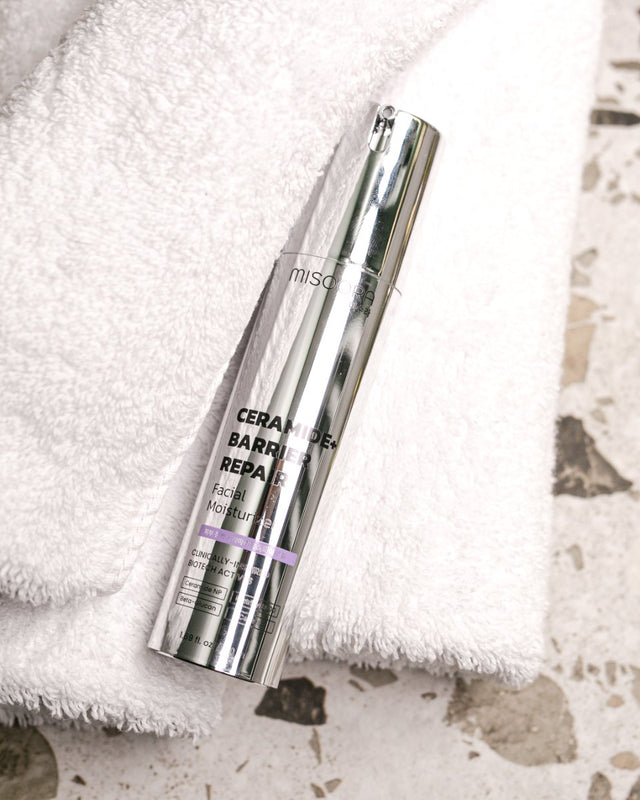
Ceramide+ Barrier Repair Moisturizer
A fragrance-free ceramide cream for dry, mature skin. Tap a little around the eyes after your serums to relieve tightness and keep fine lines from looking deeper as indoor heating dries the air.
Shop Ceramide+08An eye-area routine for skin over 50
You do not need a separate eye cream for every concern. A short routine that treats the whole face, eye area included, is easier to stick to.
Morning
De-puff, firm, protect


Evening
Cleanse, renew, seal


Why the morning matters too
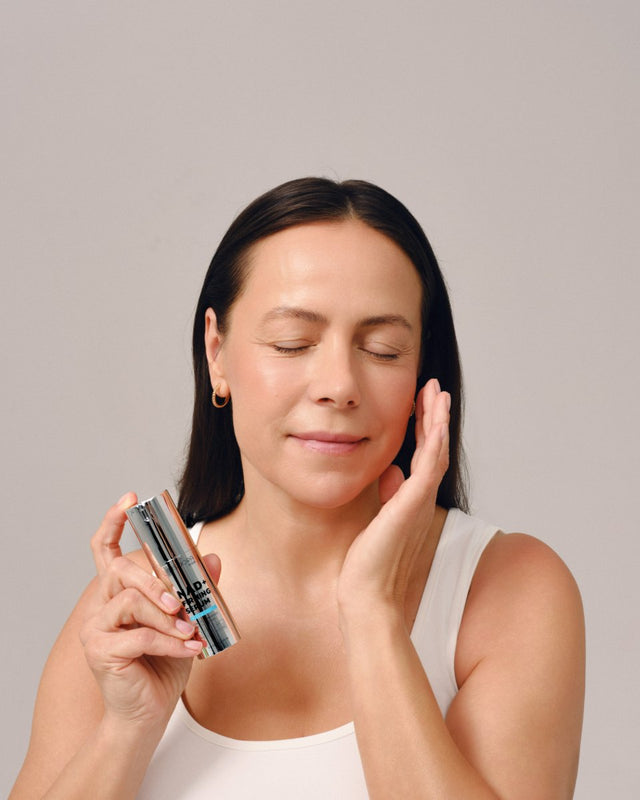
Eyes are often at their puffiest first thing, and a morning serum gives the skin around them a firmer, fresher look before the day starts. Our NAD+ Firming Serum is made for exactly that slot, under moisturizer and sunscreen.
On nights when your eyes feel dry or irritated, skip the retinal and go straight from cleanser to PDRN serum and moisturizer. Whenever you use all three, the order stays the same: retinal, then PDRN, then moisturizer.
Shop NAD+ Firming Serum


09When should you see a doctor?
Under-eye bags and dark circles are usually harmless.1 But puffiness can also come with conditions such as dermatitis, kidney disease or thyroid eye disease.1 See a health care provider if you notice:
- Problems with your vision, eye irritation or headaches along with the puffiness.1
- A rash, itching or scaling on the eyelids, which may be eczema or contact dermatitis.12
- Night sweats or insomnia that leave you exhausted most days.5
Key takeaways
- Lower-eyelid skin is among the thinnest on the body, so it shows menopause changes early.3
- Skin loses nearly a third of its collagen in the first five years after menopause.4
- Bags, brown circles, blue-purple circles and hollows have different causes, so check which you have first.13
- Cool compresses, less salt, a raised pillow, daily SPF 30+ and no rubbing are the free fixes.12
- A gentle retinal along the orbital bone, layered with PDRN serum and a ceramide moisturizer, helps eye-area skin look smoother.7
10FAQ
Does menopause cause bags under the eyes?
Not directly, but it adds to the main cause. Bags form when the tissues supporting the eyelids weaken with age and fat shifts into the lower lids.1 The drop in collagen after menopause and the poor sleep many women have in perimenopause can make them more noticeable.45
Why are my dark circles worse in my 50s?
Thinner skin lets blood vessels and muscle show through, and lost fat and volume around the eye create shadows.3 Sun exposure and rubbing can add brown pigment on top.2
Do I need a separate eye cream?
Not necessarily. What matters is the formula, not the label: fragrance-free, gentle and moisturizing. Many face serums and creams can be used around the eyes if your skin tolerates them; keep strong actives off the eyelids and lash line.
Can I put retinal under my eyes?
Yes, with care. Start two or three nights a week, use a tiny amount along the orbital bone and follow with moisturizer. In a 12-week study, a nightly retinoid eye cream improved dryness, puffiness and under-eye darkness without product-related side effects.7
What gets rid of puffy eyes fast?
A cool compress, such as a chilled wet cloth, for a few minutes.12 To prevent it, sleep with your head slightly raised and cut back on salty food in the evening.12
Does lack of sleep really make dark circles worse?
Yes. In a controlled study, sleep-deprived faces were rated as having darker circles, more swollen eyes and more hanging eyelids than the same faces after normal sleep.6
Keep reading: Crepey skin after menopause: neck, chest and arms · A menopause night routine for better sleep and skin
References
- Mayo Clinic. Bags under eyes: symptoms and causes.
- Mayo Clinic. Dark circles under eyes: causes.
- Vrcek I, Ozgur O, Nakra T. Infraorbital dark circles: a review of the pathogenesis, evaluation and treatment. Journal of Cutaneous and Aesthetic Surgery. 2016;9(2):65–72.
- Kamp E, Ashraf M, Musbahi E, DeGiovanni C. Menopause, skin and common dermatoses. Part 2: skin disorders. Clinical and Experimental Dermatology. 2022;47(12):2117–2122.
- Kravitz HM, Joffe H. Sleep during the perimenopause: a SWAN story. Obstetrics and Gynecology Clinics of North America. 2011;38(3):567–586.
- Sundelin T, Lekander M, Kecklund G, Van Someren EJW, Olsson A, Axelsson J. Cues of fatigue: effects of sleep deprivation on facial appearance. Sleep. 2013;36(9):1355–1360.
- Kaufman J, Callender VD, Young C, Jones P, Wortzman M, Nelson DB. Efficacy and tolerability of a retinoid eye cream for fine to moderate wrinkles of the periorbital region. Journal of Drugs in Dermatology. 2022;21(9):932–937.
- Galderma survey of 4,300+ peri- and postmenopausal women, presented at IMCAS World Congress 2026. Reported in Survey reveals knowledge gap on menopause-related skin changes. Plastic Surgery Practice. February 2026.
- American Academy of Dermatology. Skin care during menopause.
Written by MISOORA Editorial. This article is for general information and is not medical advice. If puffiness comes with vision changes, eye irritation, headaches or a rash, see a doctor. Product results are cosmetic and vary from person to person.