

Menopause & Mature Skin · Guide
Same foundation, same brush, and by lunchtime it has found every line on your face. With the holidays coming, here is what changed under your makeup and how to get it sitting smoothly again.

The short answer
Makeup often looks cakey after menopause because the skin under it has changed, not because you forgot how to apply it. Oil production drops by about 40% in a woman’s 50s,2 and one small study found lower ceramide levels after menopause.3 Dry skin can pull moisture out of foundation and leave pigment sitting in lines.4 The fix starts before the makeup: gentle cleanser, a cream moisturizer on damp skin, sunscreen, then thin layers of liquid or cream foundation.456
01Why does my makeup look cakey all of a sudden?
You probably did not change a thing, and that may be the problem. The foundation that looked great at 42 was chosen for the skin you had at 42.
If you put this down to plain old aging, you have company. In a 2026 Galderma survey of 5,090 women in the US, UK, Brazil and China, 56% first blamed menopause-related skin changes on general aging, and only 29% connected them to menopause.1 The survey comes from a skincare company, so read it as a snapshot rather than a verdict. Still, the distinction helps here: if your skin has changed, the answer is to change the prep, not to pile on more coverage.
02What changes in your skin at menopause that affects makeup?
The approximate drop in women’s sebum (skin oil) production during their 50s, with a further decline in their 60s.2
That oil does more than make your nose shine. It is part of the slip that helped foundation glide. Three other changes stack on top of it:
- Fewer barrier lipids. A small study compared skin before and after menopause and found ceramides were lower in the postmenopausal group.3 With only about 10 women in that group it is an early finding, but it fits what many women notice in the mirror.
- Less moisture. The American Academy of Dermatology (AAD) notes that skin holds less moisture with age.5
- Deeper lines. Up to 30% of skin collagen can be lost in the first five years after menopause,9 so there are simply more places for pigment to collect.
Then November arrives. A research review found that low humidity and low temperatures weaken skin barrier function.8 If your makeup seems to have gotten worse in the last few weeks, the heating may have as much to do with it as your age.
03Why does foundation settle into fine lines?
A dermatologist, a dermatopathologist and a makeup artist who spoke to Yahoo Lifestyle pointed to a few repeat offenders: skin that is short on moisture and pulls it from the foundation, powder formulas that collect in lines and pores, and a formula that no longer suits your skin type.4 Too much of a greasy cream can cause trouble too, because foundation has nothing to grip.4
Most of what goes wrong can be traced back to what is underneath. Use this to work out where to start:
| What you see | Likely cause | What to try |
|---|---|---|
| Creasing around the eyes and mouth | Dry skin, or too much product4 | Moisturize first, use less foundation, and press out creases with a clean finger |
| Patchy, flaky cheeks | Dryness or retinoid peeling11 | Cream moisturizer on damp skin; skip scrubs |
| Cakey look by midday | Powder or too many layers4 | Swap to liquid or cream and powder only where you shine |
| Foundation sliding off | Heavy, greasy cream underneath4 | Use a thinner layer and give it a few minutes to sink in |
| Pilling, little rolls of product | Layers that did not set, or talc-heavy formulas4 | Apply less of each product and wait between steps |
04How do I prep mature skin so makeup goes on smoothly?
The AAD’s order is simple: cleanse, treatment, moisturizer or sunscreen, then makeup.6 Most of the difference comes from doing those steps gently and not rushing them.
- Wash gentlyUse warm water and a fragrance-free cleanser, then pat dry instead of rubbing.7
- Keep skin dampMoisturizer works best on skin that is still slightly damp, because it helps trap the water.5
- Pick a creamThe AAD suggests a cream-based moisturizer for anyone perimenopausal or over 50.5
- Give it a few minutesLet each layer settle, so your foundation is not sliding around on wet cream.


Our pick for skin that drinks up foundation
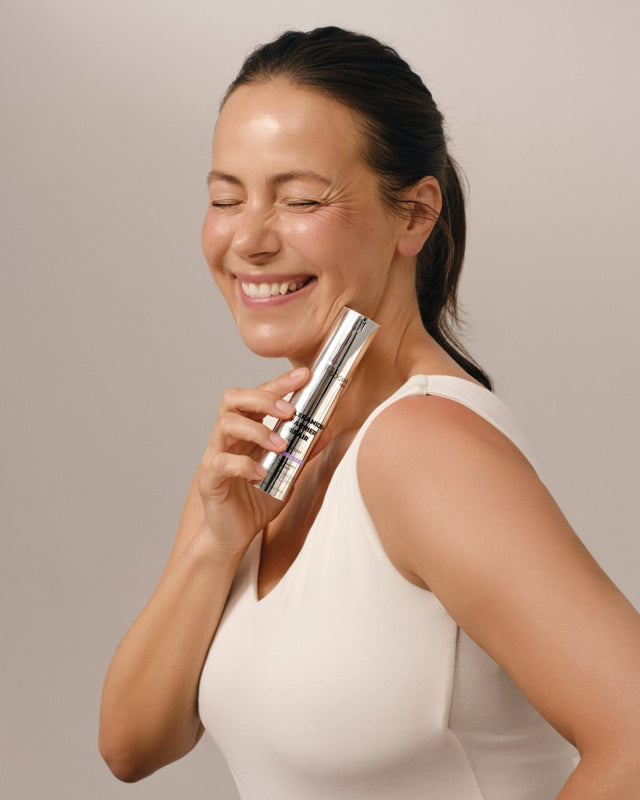
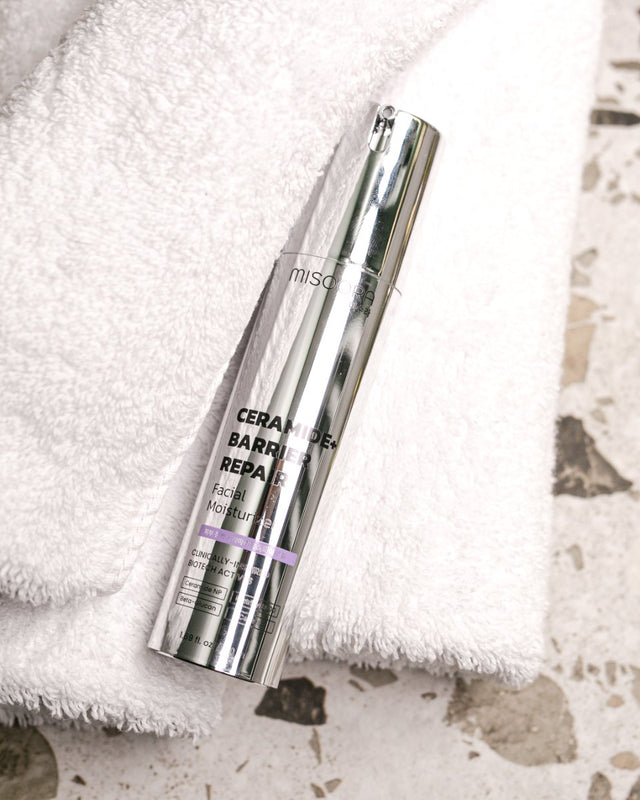
Ceramide+ Barrier Repair Moisturizer
A ceramide-rich cream for dry, mature skin, with no fragrance and no ethanol. Pat it on damp skin as your last skincare step, so your makeup starts on skin that looks smooth and feels comfortable.
Shop Ceramide+
Our pick for step one
Centella Ceramide Amino Acid Cleanser
An amino acid cleanser with centella and ceramides, made for mature skin. A good choice if your face feels tight right after washing, since tight skin is hard to put makeup on.
Shop the cleanser05Do I need a primer for mature skin?
Not necessarily. A primer can make foundation feel easier to blend, and plenty of women like one around the nose or on the forehead. But it is a surface product. It sits on top of dry skin rather than making that skin less dry.
So get the moisturizer right first. If your makeup still creases after a week or two, try a thin layer of primer only where you crease, and let it dry before anything else goes on.
06What kind of foundation works best after 50?
Liquids and creams tend to behave better than powders, which can settle into fine lines and enlarged pores.4 If the formula you loved in your 30s was made for oily skin, it may simply be time for a new one.4 A few habits help whichever you choose:
- Start in the center of your face and blend outward, so the edges stay sheer.
- Use less than you think. You can add a second thin layer where you want it. You cannot take a thick one back.
- Spot-conceal instead of adding coverage all over.
- Keep powder to the T-zone, and press it on rather than sweeping.
- Check it in daylight, especially if your bathroom light is kind to you.
One thing not to skip: sunscreen under your foundation, even if the foundation has SPF. In a lab study simulating real-world use, both sunscreen and makeup delivered far less protection than their labels stated at the amounts people typically apply. Layering the two raised the effective SPF considerably.10
07Is my retinol making my makeup look worse?
It can, at least early on. Peeling skin and foundation are a bad combination, which is why many women give up on retinoids right when they would start to help. In a 44-week study, 35% of people using retinoic acid (tretinoin) had scaling in the first four weeks, and scaling was significantly less frequent with retinaldehyde, also called retinal.11
The long game is worth it for texture: in a controlled study of naturally aged skin, a retinol lotion improved fine wrinkles after 24 weeks.12 Smoother skin is the best base you can give a foundation. Two practical rules:
- Do not start a new retinoid right before an event. The AAD suggests testing new products on a small patch of skin for 7 to 10 days, and notes that retinol can cause temporary irritation.15
- Keep it at night. Use retinal first, then PDRN serum, then moisturizer. If you see flakes in the morning, back off to every other night and moisturize more.

Our pick for smoother-looking texture
Retinal 0.2% Barrier Serum
Retinaldehyde in a barrier-supporting base, made for mature, sensitive skin. Used at night, it helps skin look smoother over time, so foundation has less texture to catch on.
Shop Retinal 0.2%
Our pick for skin that looks tired
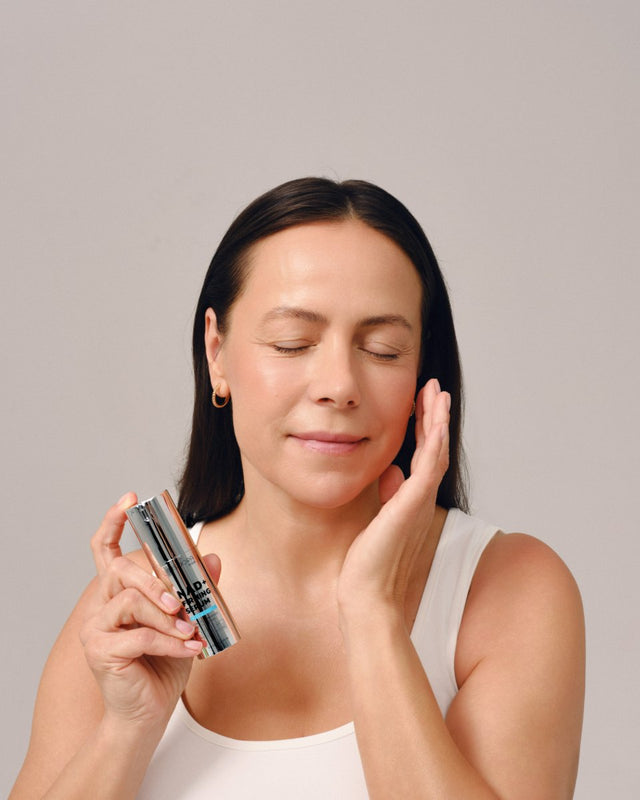
PDRN Exosome EGF Night Renewal Serum
2,000 ppm PDRN with exosomes, EGF and a peptide, 2,100 ppm of actives in total. Applied after retinal at night, it helps skin look denser and smoother over time.
Shop PDRN Serum08How can I get my skin ready for holiday parties?
Thanksgiving is three weeks away, which is enough time to make a visible difference to how dry skin looks and feels. Nothing here needs a clinic.

- This weekMove to a cream moisturizer, morning and night. Add a humidifier in the bedroom if your heating is on.7
- Over the next two weeksPatch-test anything new now, not the night before.15
- The night beforeSkip scrubs, peels and any new products. Moisturize well.
- On the dayCleanse gently, apply your morning serum and cream on damp skin, then sunscreen, then thin layers of makeup.


09Is it time to clean out your makeup bag?
Quite possibly. A foundation that has separated or thickened will not blend the way it used to, however good your prep is. US law does not require cosmetics to carry an expiration date, so the FDA suggests writing the date you open a product on the container.13 It also says to wash your hands before use, keep containers clean and closed, and never share makeup.13
| Product | Rough life after opening |
|---|---|
| Mascara | About 4 to 6 months14 |
| Liquid foundation, concealer | About 1 year14 |
| Cream products | About 6 months to 1 year14 |
| Powder products | About 12 to 18 months14 |
| Brushes | Clean every 7 to 10 days14 |
Toss anything that looks, smells or feels different, whatever the date says.14
Key takeaways
- Oil output falls by about 40% in a woman’s 50s, and skin holds less moisture.25
- Dry skin can pull moisture from foundation, leaving pigment in lines.4
- Liquid and cream formulas usually sit better than powder on mature skin.4
- A cream moisturizer on damp skin matters more than any primer.5
- Keep sunscreen under your makeup, even if the makeup has SPF.10
- Patch-test new retinoids well before an event, not the night before.15
10FAQ
Why does my foundation look worse than it did five years ago?
Your skin is likely drier, with less oil and possibly fewer ceramides, and lines may be deeper.239 Foundation shows all of that. Better prep and a lighter formula usually help more than a new brand of the same thing.
How long should I wait between moisturizer and foundation?
There is no official number. Wait until the cream no longer feels wet, usually a few minutes. If foundation starts to slide or pill, give it longer or use less.
Should mature skin avoid powder altogether?
No. Just use it with a light hand. Powder can settle into fine lines,4 so press a small amount only where you shine, and skip the under-eye area if it creases.
Can I wear makeup with retinol?
Yes. Use your retinoid at night and makeup during the day. If skin is flaking, moisturize more and cut back on how often you use the retinoid.
Does SPF foundation replace sunscreen?
It is not a safe swap. At the amounts people actually apply, makeup and sunscreen both fall well short of their labels, and layering the two gives better protection.10
Is it menopause or just aging?
Usually both, and they are hard to separate. Hormonal changes can significantly affect skin, and most women do not connect the two at first.1 Our menopause skin care guide goes through what changes and when.
Keep reading: A winter plan for dry, tight, itchy skin · Lip lines after menopause
References
- Galderma. New Galderma research reveals more than half of women mistake menopause-related skin changes for signs of ageing. Company survey of 5,090 women in the US, UK, Brazil and China, conducted August 25 to September 1, 2026.
- Bouloc A, Roo E, Moga A, Chadoutaud B, Zouboulis CC. A compensating skin care complex containing Pro-xylane in menopausal women. Acta Dermato-Venereologica. 2017;97(4).
- Mellody KT, Kendall AC, Wray JR, et al. Influence of menopause and hormone replacement therapy on epidermal ageing and skin biomechanical function. JEADV. 2022;36(7):e576–e580.
- Here’s why foundation settles into fine lines, plus how to prevent it. Yahoo Lifestyle. Comments from two board-certified physicians and a makeup artist.
- American Academy of Dermatology. How to pick the right moisturizer for your skin.
- American Academy of Dermatology. Should I apply my skin care products in a certain order?
- American Academy of Dermatology. Dermatologists’ top tips for relieving dry skin.
- Engebretsen KA, Johansen JD, Kezic S, Linneberg A, Thyssen JP. The effect of environmental humidity and temperature on skin barrier function and dermatitis. JEADV. 2016;30(2):223–249.
- Calleja-Agius J, Muscat-Baron Y, Brincat MP. Skin ageing. Menopause International. 2007;13(2):60–64.
- Kim MA, Jung YC, Bae J, Ha J, Kim E. Layering sunscreen with facial makeup enhances its sun protection factor under real-use conditions. Skin Research and Technology. 2021;27(5):751–757.
- Fluhr JW, Vienne MP, Lauze C, Dupuy P, Gehring W, Gloor M. Tolerance profile of retinol, retinaldehyde and retinoic acid under maximized and long-term clinical conditions. Dermatology. 1999;199(Suppl 1):57–60.
- Kafi R, Kwak HS, Schumacher WE, et al. Improvement of naturally aged skin with vitamin A (retinol). Archives of Dermatology. 2007;143(5):606–612.
- US Food and Drug Administration. Using cosmetics safely.
- Baylor Scott & White Health. Makeup expiration dates: is it time to throw your makeup out?
- American Academy of Dermatology. How to test skin care products.
Written by MISOORA Editorial. This article is for general information and is not medical advice. See a dermatologist about a rash, or any patch or spot that changes or does not heal. Product results are cosmetic and vary from person to person.