

Topical Estrogen · Guide
Estrogen face creams are all over your feed, and dermatologists are split on them. Here is what the studies actually show, what the risks are, and what you can use on your skin tonight if you would rather not put a hormone on your face.

The short answer
Estrogen creams can make facial skin thicker and firmer in small, short studies, but the evidence is thin. A 2026 systematic review found only one double-blind randomized trial of estradiol, and long-term safety is unknown.12 These creams are not approved for facial rejuvenation, and retinoids, antioxidants and sun protection remain the first-line options.3 If you are curious, talk to your doctor before trying one. Don’t just borrow a vaginal cream.
01Why is everyone talking about estrogen face cream?
Menopause skin is finally getting attention. In an October 2026 survey of 5,090 women in the US, UK, Brazil and China, 56% said they first put their menopause-related skin changes down to general aging, 70% had bought anti-aging products hoping they would help, and 62% felt overwhelmed by skincare advice.4
Hormone therapy is in the news too. On October 30, 2026, the FDA removed boxed-warning statements on cardiovascular disease, breast cancer and probable dementia from three more estradiol patches, after a first group of six products in February.5 Those label changes cover specific FDA-approved medicines. They say nothing about face creams, but it’s easy to see why many women now wonder whether a little estrogen on the face is the missing step.
of women first blamed menopause-related skin changes on general aging, in a survey of 5,090 women across four countries.4
The logic is simple. Falling estrogen speeds up collagen loss, with about 30% of skin collagen lost in the first five years after menopause.6 So why not put estrogen back where the problem shows? Dr. Shoshana Marmon, a coauthor of the most recent systematic review, urges caution: she says marketing is moving faster than the data, and that there is “a lot of hype surrounding menopause.”2
02Does estrogen cream work on the face?
Sometimes, on some measures, in small studies. The systematic review published in the Journal of the American Academy of Dermatology pulled together what exists and found the same limits again and again: small groups, treatment of six months or less, and study designs too different to combine in a meta-analysis.123
What the better-known studies found
- Estradiol 0.01%, randomized, split-face. In 65 postmenopausal women over six months, estradiol cream increased the thickness of the skin’s outer layer by 23%. Six women dropped out in the first month because of skin sensitivity, two of them on the estradiol cream.7
- Estradiol 0.01% or estriol 0.3%. In 59 women approaching menopause with signs of skin aging, wrinkle depth and pore size fell 61 to 100% in both groups over six months.8 These are striking numbers, but they come from one small study from 1996.
- Estradiol vs plant estrogens. In one comparison, 88% of women using estradiol saw better skin appearance, compared with 50% using a plant-based estrogen.9
- Estradiol vs glycolic acid. In one study, estradiol was slightly less effective than glycolic acid, an everyday exfoliating acid.2
- Estrone 1%. A double-blind trial found no improvement in wrinkles or elasticity, and more of an enzyme, MMP-1, that may break collagen down.23

How to read these results
Thicker isn’t always better looking. Many of these studies measure skin thickness under a microscope, which isn’t the same as what you see in the mirror.
Short studies only. Six months tells us little about using a hormone cream for years.
Small numbers. Most studies were prospective and uncontrolled, so a real effect is hard to separate from the moisturizing base and expectation.3
03Does it help sun-damaged skin?
This is the question most articles skip, and it may matter most for your face. A University of Michigan team tested estradiol at four strengths, up to 2.5%, in 40 women at least five years past menopause and 30 men of the same age. After two weeks, sun-protected skin in women made more collagen types I and III. Sun-damaged skin did not improve at any dose, in women or in men.10
Two weeks is short, so this doesn’t settle the matter. Still, the 2026 review reached a similar conclusion: UV-exposed skin may respond less favorably than skin kept out of the sun.2 If you spent your 20s at the beach, the face you want to treat may be the skin least likely to benefit.
04Is estrogen face cream safe?
Nobody knows for sure in the long term. Researchers have called for larger controlled trials specifically because long-term safety hasn’t been established.2 Here is what has been reported so far.
| Concern | What the research says |
|---|---|
| Absorption into the body | Several small studies found no significant change in blood estradiol.9 But conjugated equine estrogen showed cytologic signs of absorption, and short-term trials reported prolactin rises and vaginal cell changes.3 |
| Breast symptoms | Pain and breast tension were reported in one estriol study, and breast tenderness in short-term trials.23 |
| Dark patches | Hyperpigmentation was reported with estriol and estradiol. Researchers want it studied further because estrogen is linked to melasma.2 |
| The uterus | Long-term endometrial risk is unknown for women with a uterus who aren’t taking progesterone.2 |
| Product quality | Compounded, non-FDA-approved creams can vary in dose from batch to batch.2 |
None of this means estrogen cream is dangerous for everyone. It means the safety question is open, and it’s a question for your doctor, especially if you have had breast cancer, take other hormones or have a uterus and no progesterone.
05Can I use vaginal estrogen cream on my face?
This hack is everywhere online, and we wouldn’t recommend trying it on your own. Vaginal estrogen creams are approved and studied for the vagina, where licensed products use very low doses and blood levels stay in the postmenopausal range.11 That reassurance doesn’t automatically transfer to the face. Dr. Marmon’s view is that any facial benefit is unknown, while FDA-approved vaginal estrogen, used as directed, remains a safe option for genitourinary symptoms.2
There is one more practical issue. If you already use vaginal estrogen, adding it to your face may raise your total exposure, particularly if you have a uterus and don’t take progesterone.3 Tell your doctor about every hormone product you use, including anything on your skin.
06Estriol, estradiol or plant estrogens: what’s the difference?
| Type | What to know |
|---|---|
| Estradiol | The most studied, with the most consistent results for skin thickness and collagen.2 |
| Estriol | Often described as the gentlest estrogen for the face.12 Results on wrinkles, firmness and hydration look comparable to estradiol in a few studies.2 Estriol is not an FDA-approved drug, and US prescriptions rely on compounding pharmacies.13 |
| Conjugated equine estrogen | The hormone in the vaginal cream Premarin.12 It increased skin thickness and reduced fine wrinkles in one placebo-controlled study, with signs of absorption.23 |
| Plant estrogens | Increased thickness, collagen and hyaluronic acid in three small studies, but were less effective than estradiol.2 |
| MEP (methyl estradiolpropanoate) | An estrogen-like ingredient designed to break down to an inactive form in the skin. In a 14-week vehicle-controlled pilot study, it improved dryness, laxity, atrophy and dullness.14 Pilot data only so far. |
07What works instead of estrogen cream?
Dermatologists quoted in the 2026 coverage are clear on the order: results from facial estrogen are modest, and retinoids, antioxidants and sun protection remain first-line.3 You can start them tonight, no prescription needed.
Retinoids: the strongest place to start
In a study of 36 older adults with an average age of 87, a 0.4% retinol lotion reduced wrinkles and roughness on the treated arm over 24 weeks, and biopsies showed more procollagen and glycosaminoglycans.15 Retinal (retinaldehyde), one step closer to the active form of vitamin A, was tested on the face in a one-year controlled study: 0.05% cream increased epidermal thickness at the temple and improved skin elasticity compared with an emollient.16 That’s the same kind of change women hope to get from estrogen, from an ingredient that isn’t estrogen.

Our pick to start with
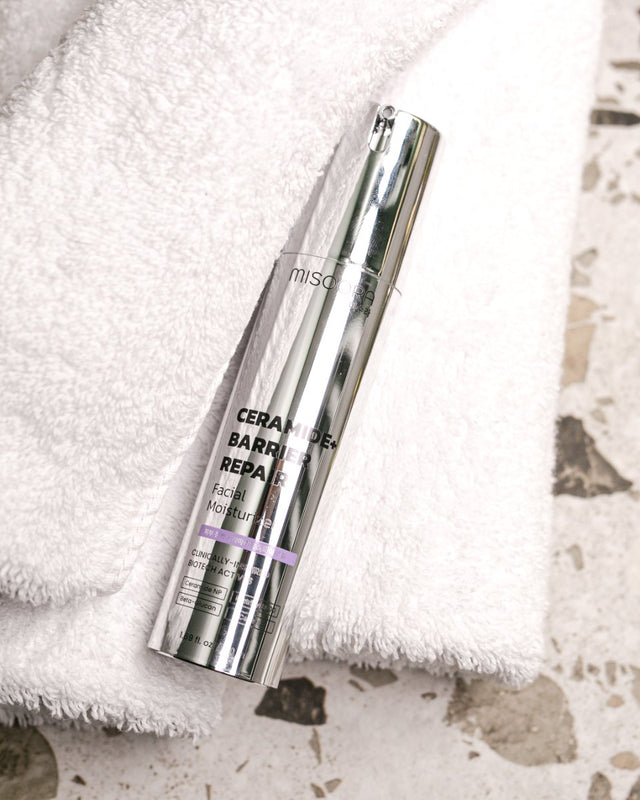
Retinal 0.2% Barrier Serum
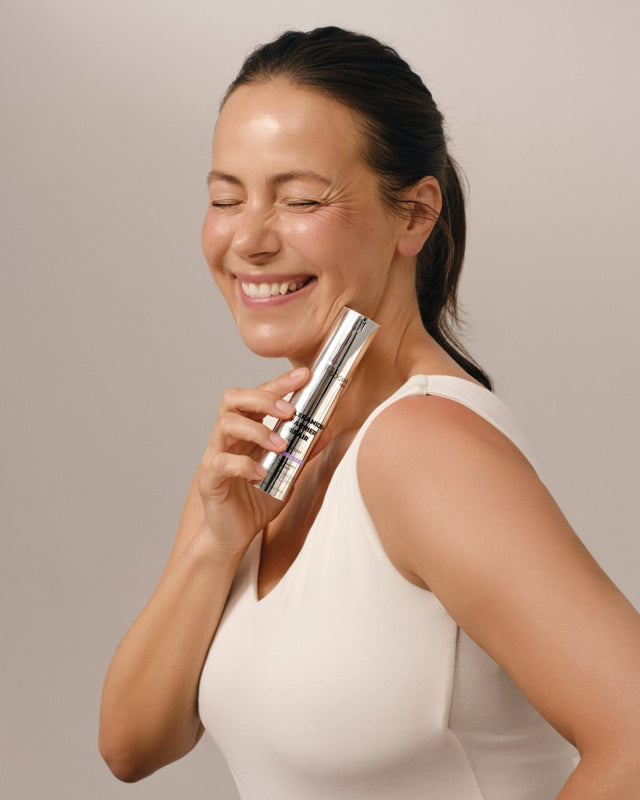
Retinaldehyde at 0.2%, buffered with ceramides for mature, sensitive skin. Use it at night to help skin look firmer and smoother, with less of the flaking that makes people quit.
Shop Retinal 0.2%
Your other everyday tools
Barrier care. Ceramide creams ease the dryness and tightness that make skin look older than it is.
Firming serums. Peptide and NAD+ serums support the look of firmer, more rested skin in the morning.
Biotech night serums. PDRN, exosomes and EGF help skin look denser and smoother with steady use.
Sunscreen. The AAD recommends broad-spectrum, water-resistant SPF 30 or higher, every day.17

Our pick for skin that looks thin
PDRN Exosome EGF Night Renewal Serum
2,000 ppm PDRN with exosomes, EGF and a peptide, 2,100 ppm of actives in total. Applied after retinal at night, it helps skin look denser, smoother and more cushioned.
Shop PDRN Serum
Our pick for mornings
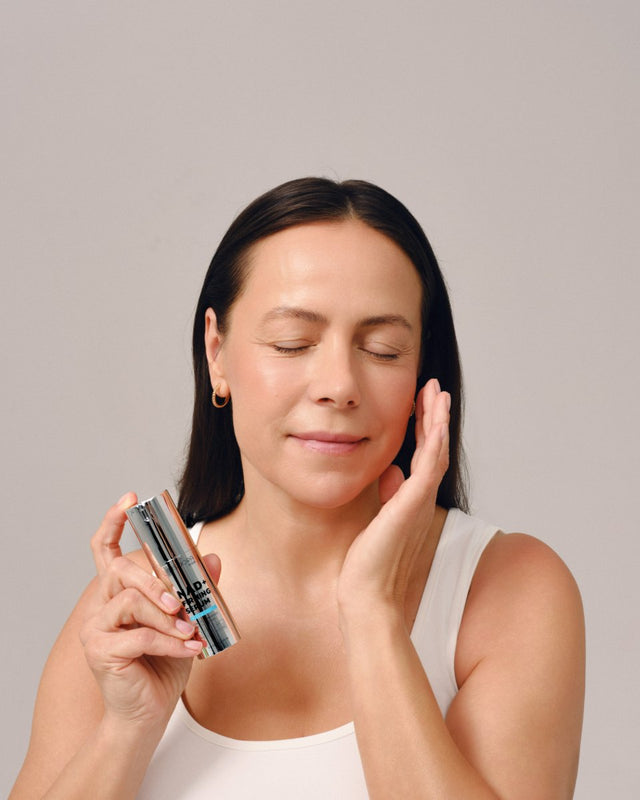
NAD+ Firming Serum
2,500 ppm NAD+ with NMN and ATP in a barrier complex. A morning step for skin that looks firmer, more lifted and more rested.
Shop NAD+ SerumTo be clear, these are cosmetic products. They don’t replace estrogen and they aren’t a treatment for menopause. If you have hot flashes, poor sleep or other symptoms, that’s a separate conversation with your doctor.3
08A routine for skin after menopause
Whether or not you decide to try an estrogen cream, your daily routine still does most of the work. Keep it to a few steps you’ll actually use.
Morning
Cleanse, firm, protect


Evening
Renew and repair

Made for mature skin
The evening order matters: retinal first, then the PDRN serum, then moisturizer. Give it 8 to 12 weeks before you judge it.
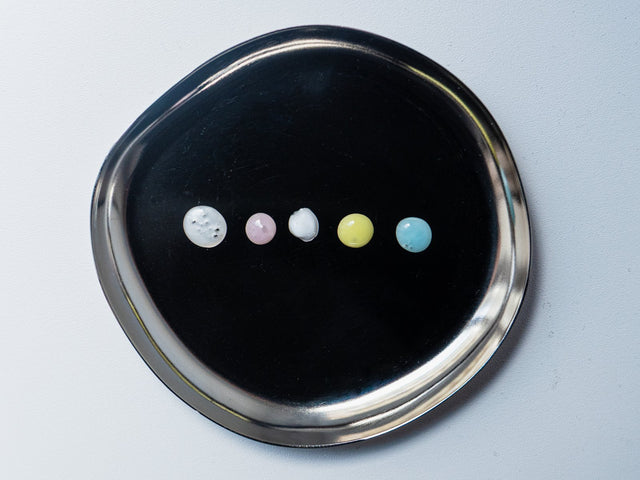
MISOORA was developed with skin over 50 in mind, though women of all ages use it. The Skin Recharge Set brings all five steps together, so you don’t have to guess what goes with what.


09What to ask your doctor
If you still want to try an estrogen cream, ask a board-certified dermatologist or your menopause clinician, and go in with these questions:
- Which estrogen is in this cream, and at what strength?
- Is it FDA-approved or compounded? If it’s compounded, how is the dose checked?
- Do I need progesterone or monitoring if I have a uterus?
- Does my history of breast cancer, blood clots or melasma change your advice?
- How does this add up with any other hormones I already use?
- How long should I use it before we decide whether it’s working?
Dermatologists also say that women with symptoms beyond the skin should get a proper hormone therapy evaluation.3 If you do want hormones for hot flashes or sleep, a face cream isn’t the way to get them.
Key takeaways
- Estrogen creams increased skin thickness and collagen in small, short studies, but only one estradiol study in the 2026 review was a double-blind randomized trial.
- Sun-damaged skin may respond poorly. One study found no collagen gain at any estradiol dose.
- Long-term safety is unknown, and hyperpigmentation, breast tenderness and signs of absorption have been reported.
- Don’t put vaginal estrogen on your face without asking your doctor, especially if you already use it.
- Retinoids, antioxidants and daily SPF remain first-line, and none of them is estrogen.
FAQ
Does estrogen cream work for wrinkles on the face?
It may help in some women. Small studies report thicker skin and fewer fine wrinkles, but most lasted six months or less, and few were well controlled. These creams aren’t approved for facial rejuvenation.
Is estriol cream safe for the face?
Short-term studies suggest low absorption, but long-term safety is unknown. Estriol isn’t an FDA-approved drug, so creams are compounded and strength can vary. Ask your doctor first.
Can I put Premarin or vaginal estrogen on my face?
It’s not what these creams are approved for, and any facial benefit is unknown. Using it on the face as well as vaginally may add to your total exposure, so don’t do it without your doctor’s advice.
Does the FDA’s boxed-warning change apply to estrogen face creams?
No. The 2026 changes cover specific FDA-approved hormone therapy products. Face creams weren’t part of them.
What can I use instead of estrogen cream?
A retinoid at night, a ceramide moisturizer and SPF 30+ every day are the best-supported places to start. Retinal is a good option for sensitive, mature skin.
Can I use retinal if I’m on hormone therapy?
Usually yes, since retinal is a form of vitamin A, not a hormone. Start 2 to 3 nights a week, and mention all your products to your doctor.
Keep reading
- Estrogen and Your Skin: What Happens When It Drops at Menopause (and What Still Works)
- Retinal vs Retinol vs Tretinoin After 50: Which Retinoid Suits Mature, Sensitive Skin
References
- Farkas E, Goldblatt A, Nehorayan I, et al. Topical estrogen for skin aging: a systematic review of safety and efficacy. J Am Acad Dermatol. 2026;94(1):212-215. touroscholar.touro.edu
- Schaffer R. ‘Unproven’ topical estrogens for the face may bring some risks. Healio, November 5, 2025. healio.com
- Assessing topical estrogen for menopausal skin. The Chronicle of Skin & Allergy, February 2026. derm.city
- Galderma. New Galderma research reveals more than half of women mistake menopause-related skin changes for signs of ageing. Business Wire, October 13, 2026 (survey of 5,090 women in the US, UK, Brazil and China; data on file). uniindia.com
- Contemporary OB/GYN. FDA removes boxed warnings from 3 more menopausal hormone therapy products. October 30, 2026. contemporaryobgyn.net
- DeGiovanni C. Managing menopausal skin: a clinician’s review. EMJ Dermatol. 2025;13(1):90-94. emjreviews.com
- Fuchs KO, Solis O, Tapawan R, Paranjpe J. The effects of an estrogen and glycolic acid cream on the facial skin of postmenopausal women: a randomized histologic study. Cutis. 2003;71:481-488. mdedge.com
- Schmidt JB, Binder M, Demschik G, Bieglmayer C, Reiner A. Treatment of skin aging with topical estrogens. Int J Dermatol. 1996;35(9):669-674. rrmacademy.org
- Johnson A, Johnson SM. A review of uses and clinical evidence for topical estrogen therapy in dermatology. Practical Dermatology, 2026. practicaldermatology.com
- Rittié L, et al. Arch Dermatol. 2008;144(9):1129-1140. Summarized in: Bryant R. Time change: topical arsenal narrows for menopausal skin. Dermatology Times, August 2009. dermatologytimes.com
- European Menopause and Andropause Society. Menopause Essentials 2026: Topical estrogens. emas-online.org
- Fallon B. Topical estrogen for menopausal skin is trending: here’s what to know. NewBeauty, July 29, 2024. newbeauty.com
- The Menopause Society. US government takes action on bioidentical hormone therapy. menopause.org
- Draelos ZD. A double-blind randomized pilot study evaluating the safety and efficacy of topical MEP in the facial appearance improvement of estrogen deficient females. J Drugs Dermatol. 2018;17(11):1186-1189. jddonline.com
- Kafi R, Kwak HS, Schumacher WE, et al. Improvement of naturally aged skin with vitamin A (retinol). Arch Dermatol. 2007;143(5):606-612. eurekalert.org
- Diridollou S, et al. Efficacy of topical 0.05% retinaldehyde in skin aging by ultrasound and rheological techniques. Dermatology. 1999;199(Suppl 1):37-41. PubMed 10473959
- American Academy of Dermatology. How to select a sunscreen. aad.org
Written by MISOORA Editorial. This article is for general information and is not medical advice. Skincare results described are cosmetic and vary from person to person. Talk to your doctor or a board-certified dermatologist before using any hormone product on your skin.