

Menopause & Mature Skin · Ingredient Guide
Bakuchiol is sold as the gentle, plant-based retinol. If retinoids have started to sting, flake or redden your skin since menopause, it sounds like the perfect fix. Here is what the research actually shows, where bakuchiol falls short, and the middle option many women over 50 never try.

The short answer
Bakuchiol is a plant compound that behaves a lot like retinol in lab tests.1 In one 12-week randomized trial of 44 people, bakuchiol used twice a day improved wrinkles and dark spots about as much as retinol used once a day, with less scaling and stinging.2 That is promising, but it is one small study. Most other bakuchiol trials had no control group, and a 2024 review gave bakuchiol a C grade against an A for retinol.34 After menopause, when skin loses collagen fast,5 it makes sense to use the better-proven option. If retinol irritates you, retinal (retinaldehyde) is a well-tolerated retinoid with much more research behind it than bakuchiol.67
01What is bakuchiol, and is it a natural retinol?
Bakuchiol comes from the seeds and leaves of Psoralea corylifolia, a plant also known as babchi. Chemically it looks nothing like vitamin A, so it is not a retinoid and your skin does not convert it into one.1
The “natural retinol” label comes from a 2014 lab study. On a 3D model of human skin, bakuchiol switched on a gene pattern strikingly similar to retinol’s, including genes for type I and type IV collagen.1 The same paper reported a small clinical case study in which a bakuchiol product applied twice a day for 12 weeks visibly improved lines, pigmentation, elasticity and firmness.1
So bakuchiol can act like retinol in some ways. Whether it works as well as retinol on real faces is a separate question, and that is where the evidence gets thin.
02Why the retinol question matters more after menopause
At a dermatologic surgery meeting this month, dermatologist Sabrina Fabi reminded colleagues that women lose about 30% of their skin collagen in the first five years after menopause, then roughly 2% a year after that.5 An older study measured the same slow slide: skin collagen and skin thickness both fell by about 1% to 2% a year after menopause.8
The average age of the people in a 24-week trial where 0.4% retinol visibly reduced fine wrinkles compared with a plain lotion. Skin samples showed more procollagen and more water-binding glycosaminoglycans.9 Retinoids still work on very mature skin.
That is the trade-off women over 50 face. Retinoids are among the few skincare ingredients with strong proof that they help skin make new collagen, yet drier, thinner skin after menopause is often the skin that stings and peels on them. Bakuchiol promises to skip the irritation. The question is how much of the benefit you give up.
03Bakuchiol vs retinol: what the head-to-head trial found
Only one randomized, double-blind trial has compared the two directly. Researchers gave 44 adults either 0.5% bakuchiol cream twice a day or 0.5% retinol cream once a day for 12 weeks, and tracked their faces with high-resolution photos.2
- Wrinkles and dark spots: both groups improved significantly, with no statistical difference between them.2
- Comfort: the retinol group reported more scaling and stinging.2
- The catch: the bakuchiol group used their cream twice as often, the trial was small, and it lasted three months.2
It is a fair result and a good reason to take bakuchiol seriously. It is not enough to call bakuchiol an equal replacement for retinoids on mature skin.
04How strong is the evidence for bakuchiol?
A 2024 systematic review found 15 human trials of topical bakuchiol. Twelve were open-label with no control group, ten tested formulas that mixed bakuchiol with other actives, and four did not say how much bakuchiol was used. The authors concluded the trials lacked rigor and carried a high risk of bias.3
A second 2024 review graded 32 anti-aging skincare studies with 1,236 patients. Retinol and vitamin C earned grade A. Bakuchiol, growth factors and a few others earned grade C, meaning the evidence is still limited.4
Natural does not mean allergy-free, either. A 2022 review of bakuchiol research found one reported case of contact dermatitis,10 so patch-test any new product on your inner arm or behind the ear for a few days first.
05Retinal: the middle ground
Retinoids work after skin converts them into retinoic acid, the form cells actually use. Each ingredient sits on a different step of that path, and the closer it is to retinoic acid, the stronger it tends to be.7
Retinal, also called retinaldehyde, is one step from retinoic acid. A review of cosmetic retinoids called retinal “fairly well tolerated” and likely the most efficient of the non-prescription forms, while retinol and retinyl esters were gentle but only modestly effective.7 In early tolerance studies, 0.05% and 0.1% retinal applied to the face were well tolerated and allowed prolonged use for up to three years.6
For many women after menopause, that is the sweet spot: closer to the active form than retinol, with a tolerance record that bakuchiol has not had time to build.

Our pick if retinol stings
Retinal 0.2% Barrier Serum
Retinal visibly smooths fine lines and crepey texture. Buffered with ceramides for drier, more sensitive skin after 50. Use it first in your evening routine, on dry skin.
Shop the retinal serum06Bakuchiol, retinol or retinal: which should you choose after 50?
| Bakuchiol | Retinol | Retinal | |
|---|---|---|---|
| What it is | Bakuchiol: Plant compound, not a retinoid1 | Retinol: Vitamin A, two steps from active7 | Retinal: Vitamin A, one step from active7 |
| Evidence on wrinkles | Bakuchiol: Limited; one small head-to-head trial24 | Retinol: Strong, including in very mature skin94 | Retinal: Good; rated the most efficient cosmetic retinoid in one review7 |
| Irritation | Bakuchiol: Low in trials; allergy reported rarely210 | Retinol: More scaling and stinging2 | Retinal: Fairly well tolerated76 |
| Best for | Bakuchiol: Very reactive skin, or as a first step | Retinol: Skin that has tolerated retinoids for years | Retinal: Mature skin that wants results with less sting |

A simple way to decide
- Retinol never bothered you? Keep using it, or step up to retinal for a stronger option.
- Retinol stings or peels? Try retinal every other night with a ceramide moisturizer before giving up on retinoids.117
- Constant redness or rosacea? Dermatologists advise skipping retinoids and asking about other options.11 Check with your dermatologist before trying bakuchiol too, and patch-test it first.10
07How to start a retinoid if your skin is sensitive
The American Academy of Dermatology suggests starting with the least intense formula, using it every other night and building up slowly, applying it only at night, and wearing sunscreen every day because retinoids make skin more sensitive to the sun.11 A moisturizer helps limit irritation.11
- Weeks 1 to 2Retinal two or three evenings a week, on dry skin, then moisturizer.11
- Weeks 3 to 4Every other night if your skin feels comfortable.11
- Week 5 onwardMost nights, as long as there is no lasting redness or peeling.
- Every morningBroad-spectrum SPF, even in winter.11
- Give it timeThe trials above ran 12 to 24 weeks before measuring results.29

Our pick for retinoid nights
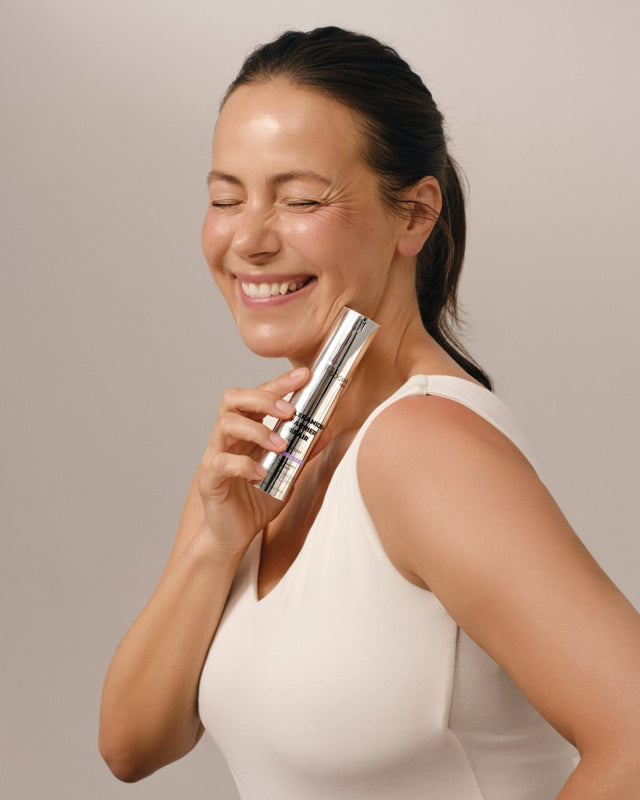
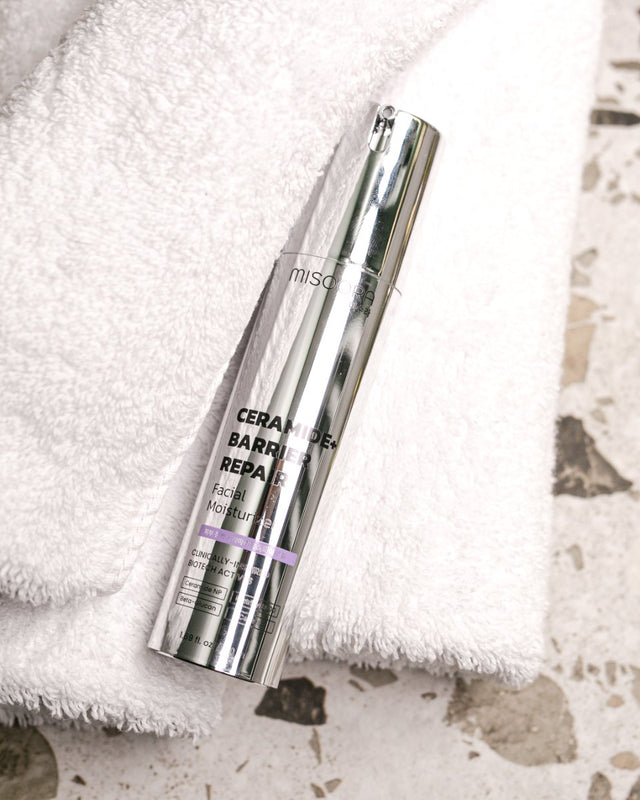
Ceramide+ Barrier Repair Moisturizer
A rich ceramide cream that seals in moisture and helps dry, tight skin feel comfortable through the retinoid adjustment weeks. The last step every evening.
Shop the moisturizerMorning
Protect

Evening
Renew

Why PDRN comes second
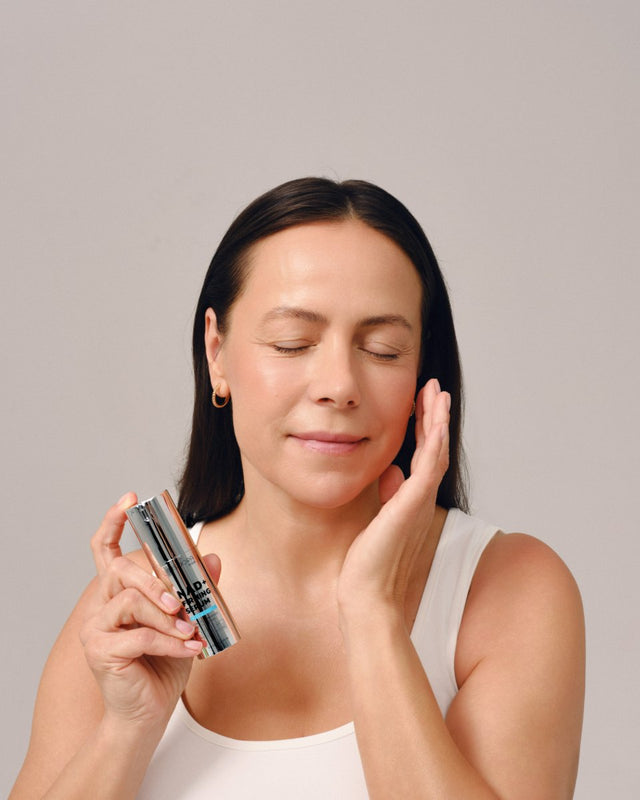
Our PDRN Exosome EGF Night Renewal Serum pairs 2,000 ppm PDRN with exosomes, EGF and peptide to support the look of firmer, bouncier skin. Layer it right after retinal on the same night, then seal both in with moisturizer.

Get the whole routine in one box. The sets cost less than buying each product separately, and they make an easy holiday gift.


Key takeaways
- Bakuchiol is a plant compound, not a retinoid, but it acts like retinol on skin genes in the lab.
- In one 12-week trial of 44 people, it matched retinol on wrinkles and dark spots with less stinging.
- Most other bakuchiol trials had no control group; reviewers grade its evidence C, retinol A.
- After menopause skin loses collagen fast, so the better-proven retinoids are still worth trying.
- If retinol irritates you, retinal every other night with a ceramide moisturizer is the middle ground.
FAQFrequently asked questions
Is bakuchiol as good as retinol?
In the only head-to-head randomized trial, 0.5% bakuchiol twice a day and 0.5% retinol once a day improved wrinkles and dark spots by similar amounts over 12 weeks.2 Retinol has far more research behind it, though, including in very mature skin.94
Is bakuchiol a retinoid?
No. It has no structural resemblance to vitamin A and is not converted to retinoic acid. It simply triggers some similar gene activity in lab skin models.1
Can I use bakuchiol and retinal together?
Many bakuchiol products already contain other actives, and there is little research on layering it with a retinoid.3 If you want both, add one product at a time and watch how your skin responds before adding the next.
Is bakuchiol safe for sensitive skin?
It caused less scaling and stinging than retinol in trials,2 but at least one case of allergic contact dermatitis has been reported.10 Patch-test it for a few days before using it on your face.
How long until I see results?
Plan on about three months. The bakuchiol trial measured results at 12 weeks, and the retinol trial in older adults ran 24 weeks.29
Do I need sunscreen with retinal or bakuchiol?
Yes with retinal: retinoids can make skin more sensitive to the sun, so use them at night and wear sunscreen every day.11 Daily SPF is worth it with any routine after menopause.
Keep reading: Retinal vs retinol vs tretinoin after 50 · Retinol irritation after menopause, and how to fix it
References
- Chaudhuri RK, Bojanowski K. Bakuchiol: a retinol-like functional compound revealed by gene expression profiling and clinically proven to have anti-aging effects. International Journal of Cosmetic Science. 2014;36(3):221–230.
- Dhaliwal S, Rybak I, Ellis SR, et al. Prospective, randomized, double-blind assessment of topical bakuchiol and retinol for facial photoageing. British Journal of Dermatology. 2019;180(2):289–296.
- Fanning JE, McGee SA, Ibrahim OI. Human clinical trials using topical bakuchiol formulations for the treatment of skin disorders: a systematic review. Journal of Drugs in Dermatology. 2024;23(4):239–243.
- Lau M, Mineroff Gollogly J, Wang JY, Jagdeo J. Cosmeceuticals for antiaging: a systematic review of safety and efficacy. Archives of Dermatological Research. 2024;316(5):173.
- Grasso GM. Consider hormone therapy to improve menopause-related skin changes (report on a presentation by Sabrina G. Fabi, MD, at the American Society for Dermatologic Surgery Annual Meeting). Healio Dermatology. November 13, 2026.
- Saurat JH, Didierjean L, Masgrau E, et al. Topical retinaldehyde on human skin: biologic effects and tolerance. Journal of Investigative Dermatology. 1994;103(6):770–774.
- Sorg O, Antille C, Kaya G, Saurat JH. Retinoids in cosmeceuticals. Dermatologic Therapy. 2006;19(5):289–296.
- Brincat M, Kabalan S, Studd JW, et al. A study of the decrease of skin collagen content, skin thickness, and bone mass in the postmenopausal woman. Obstetrics & Gynecology. 1987;70(6):840–845.
- Kafi R, Kwak HSR, Schumacher WE, et al. Improvement of naturally aged skin with vitamin A (retinol). Archives of Dermatology. 2007;143(5):606–612.
- Puyana C, Chandan N, Tsoukas M. Applications of bakuchiol in dermatology: systematic review of the literature. Journal of Cosmetic Dermatology. 2022;21(12):6636–6643.
- American Academy of Dermatology. Retinoid or retinol?
Written by MISOORA Editorial. This article is for general information and is not medical advice. If you have a skin condition, are using prescription treatments or have persistent redness, talk to your dermatologist. Product results are cosmetic and vary from person to person.