

Menopause & Mature Skin · Guide
Your retinol used to behave. Now it stings, your cheeks flake, and cold weather makes it worse. Here is why retinoids feel harsher after menopause and in winter, what is normal, and how to keep using them without the burn.

The short answer
Dryness, redness and flaking are known side effects of retinoids, and they are most common in the first weeks.13 After menopause, the skin barrier repairs itself more slowly,5 and cold, dry air weakens it further,7 so the same product can feel stronger in winter. You usually don't need to stop. Use it less often, apply it to dry skin, follow with a ceramide moisturizer, and choose a gentler retinoid. In a large study, retinal (retinaldehyde) caused significantly less redness, scaling and burning than prescription retinoic acid.3
01Why does retinol make my skin peel and sting?
Retinoids are some of the best-studied ingredients for the look of fine lines and uneven texture. They also come with a known trade-off. Mayo Clinic lists rash, burning and dryness as possible side effects,1 and the early weeks of redness, peeling and stinging are often called retinization.8
How common is it? In a long-term study of 355 people, prescription retinoic acid caused redness in 44% of users during the first four weeks, scaling in 35% and burning or itching in 29%. Retinal caused all three significantly less often.3
That is why dermatologists advise starting slowly, every other night, and building up from there.2 Irritation is not a sign that a retinoid is working faster. It is a sign that your skin needs more time, or more support.
02Why is it worse after menopause?
Two things change at menopause that make retinoids harder to tolerate.
The barrier repairs more slowly
When researchers disrupted the outer skin barrier, it had recovered about 50% after 24 hours in people aged 20 to 30, and only about 15% in people over 80.5 The study did not test women in their 50s, but it shows the direction: with age, small irritations take longer to settle, so they can stack up from one night to the next.
Skin holds less water and itches more
In a 2025 study, postmenopausal women rated their skin itch about three times higher than women of reproductive age, and their skin held less water at the first measurement.6 Dry, itchy skin is already halfway to irritated before a retinoid touches it.

of the skin barrier had recovered 24 hours after a disruption in people over 80, compared with about 50% in people aged 20 to 30.5
03Why is retinol harder to use in winter?
Cold air holds little moisture, and heated indoor air is dry too. A review of the research concluded that low humidity and low temperatures lead to a general decrease in skin barrier function and leave skin more vulnerable to physical stress.7 Put a retinoid on top of that, and the redness and flaking you could live with in June can feel much worse in January.
What helps in winter
- Run a humidifier in the bedroom overnight, and clean it regularly.10
- Keep showers to five to ten minutes in warm, not hot, water, and pat your skin dry.10
- Choose a cream over a lotion, and apply moisturizer while skin is still slightly damp.10
- Look for products labeled fragrance-free. Unscented products can still contain irritating ingredients.10
For a full cold-weather plan, see our guide to dry skin after menopause in winter.
04Is it normal, or should I stop?
Most of the time, retinoid discomfort is irritation that settles when you slow down. Use this as a rough guide.
| What you notice | What it usually means | What to do |
|---|---|---|
| Tight skin, light flaking, pinkness that fades by morning | Common early adjustment to a retinoid13 | Keep going at fewer nights a week, with more moisturizer |
| Stinging when you apply moisturizer, raw or shiny patches, redness that lasts into the next day | Your barrier is overwhelmed | Pause the retinoid until skin feels calm, then restart at one or two nights a week |
| Swelling, blisters, hives, oozing, or a rash beyond where you applied it | Not a normal retinoid adjustment | Stop the product and see a doctor or dermatologist |
If your skin already has a lot of redness or inflammation, the AAD suggests asking a dermatologist about other options before starting a retinoid.2 And in darker skin tones, irritation can leave dark marks, so starting slowly and using moisturizer matters even more.2
05How do I use retinol without peeling?
- Start low and slowUse the gentlest formula you can find and apply it every other night at first, building up slowly.2 In winter, or if your skin is very dry, two nights a week is a sensible start.
- Apply to dry skin, in a thin layerCleanse gently, let your face dry fully, then spread a thin layer. Skip the corners of the eyes and nose and the edge of the lips, where skin is thinner and irritation shows first.
- Follow with a barrier moisturizerIn a study of women starting tretinoin, the authors concluded that strengthening the skin barrier before and during treatment made the early phase of retinization easier.8 A separate study found that a gentle moisturizer used twice a day significantly improved dryness, roughness and flaking in people using retinoids.9
- Use it at night, and protect by dayRetinoids can make skin more sensitive to the sun, so use them at bedtime and wear a broad-spectrum sunscreen every morning.12
- Change one thing at a timeHold off on new acids, scrubs or peels while your skin is adjusting, so you can tell what is causing a reaction.

Our pick for retinoid nights
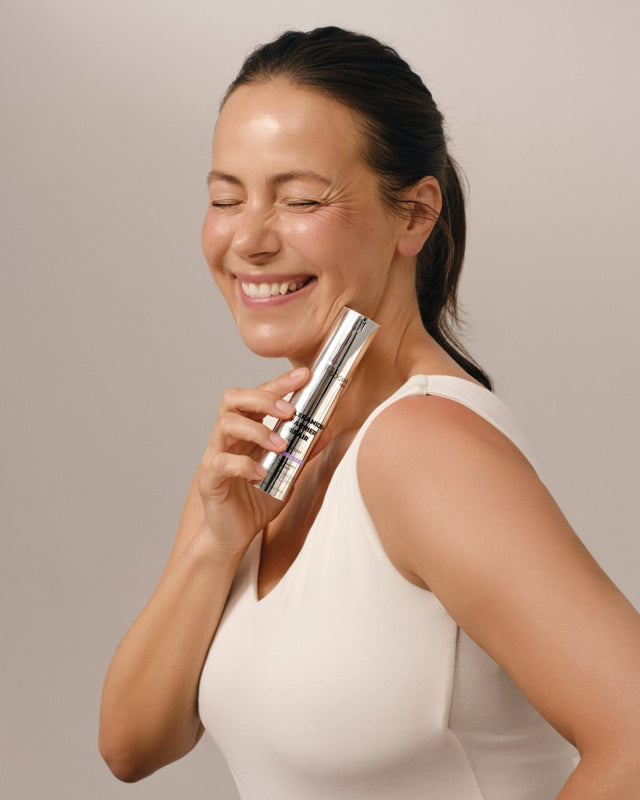
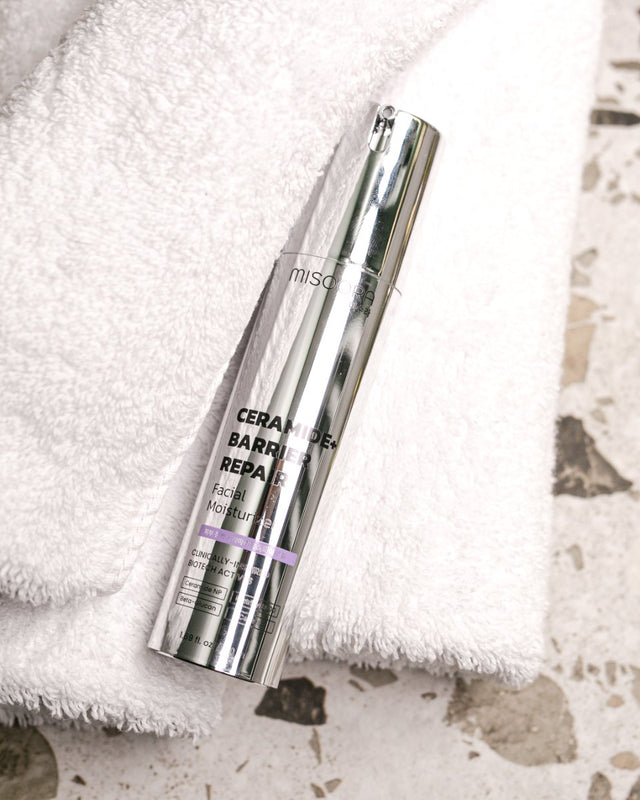
Ceramide+ Barrier Repair Moisturizer
A rich ceramide cream with no fragrance and no ethanol, made for dry, mature skin. Smoothed on after your retinoid, it helps skin feel comfortable again and look calmer by morning.
Shop Ceramide+06Is retinal gentler than retinol?
Generally, yes. Retinoids differ in how many steps skin needs to turn them into retinoic acid, the active form, and the strongest ones are also the most irritating.4 A review in Clinical Interventions in Aging noted that irritation is more prominent with tretinoin and tazarotene, while retinaldehyde and retinol are considerably less irritating.4
In a 14-day patch test, retinol and retinal showed an equally low irritation potential, while retinoic acid was more irritating.3 Over the longer study, retinal caused significantly less redness, scaling and burning than retinoic acid.3 For mature skin that is dry or reactive in winter, that makes retinal a practical middle ground.

Our pick for sensitive, mature skin
Retinal 0.2% Barrier Serum
Retinal in a serum made for mature, sensitive skin, so it is easier to stay with through the cold months. With regular use, skin looks smoother and fine lines look softer.
Shop Retinal 0.2%Want the full comparison? Read our guide to retinal vs retinol vs tretinoin after 50.
07Which habits make irritation worse?
“Peeling means it is working.”
Peeling is a sign of irritation, not progress. Results from retinoids come from steady use over a few weeks or months.1 Skin that stays comfortable is skin you can keep treating.
“Scrubbing off the flakes will fix it.”
Rubbing irritated skin adds more friction. Dermatologists suggest gentle cleansing and patting skin dry instead.10 A rich cream will smooth flakes better than a scrub.
“Unscented and fragrance-free are the same thing.”
Not quite. The AAD notes that unscented products may still contain chemicals that irritate dry, sensitive skin, and recommends products labeled fragrance-free.10
“I should stop retinol until spring.”
Only if your skin will not settle. For most people, dropping to two or three nights a week and adding moisturizer is enough to get through winter without losing the habit.
08A winter evening routine with retinal

Every evening
- Gentle, fragrance-free cleanser. Pat dry.
- Retinal 0.2% on fully dry skin, on your scheduled nights.
- PDRN serum.
- Ceramide+ moisturizer, every night.
Every morning
- Splash with lukewarm water or a gentle cleanser.
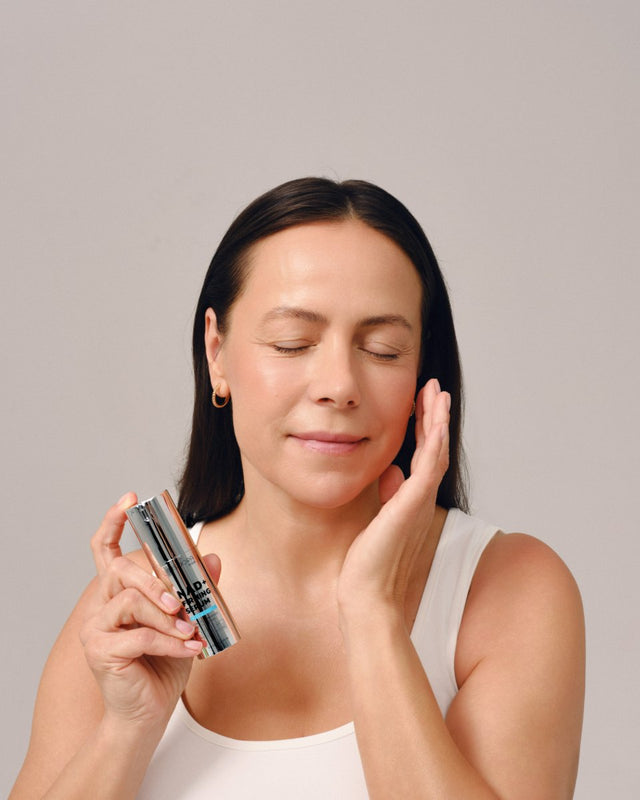
- NAD+ Firming Serum.
- Ceramide+ moisturizer.
- Broad-spectrum SPF 30 or higher.11
On rest nights, skip the retinal and keep the rest.

Our pick for after retinal
PDRN Exosome EGF Night Renewal Serum
2,000 ppm PDRN with exosomes, EGF and a peptide, 2,100 ppm of actives in total. Applied after retinal and before moisturizer, it helps skin look calmer, bouncier and more rested by morning.
Shop PDRN Serum


Key takeaways
- Dryness, redness and flaking are known retinoid side effects, most common in the first weeks.13
- After menopause the skin barrier repairs more slowly, so irritation builds up faster.56
- Cold, dry air weakens the barrier further, which is why retinoids feel harsher in winter.7
- Start every other night or less, apply to dry skin, and follow with a barrier moisturizer.289
- Retinal is considerably gentler than prescription retinoic acid.34
- Swelling, blisters or hives are not normal. Stop and see a dermatologist.
09FAQ
How long does retinol irritation last?
It is most common in the first weeks, while skin adjusts.38 If it doesn't settle within a week or two after you cut back, or it keeps getting worse, pause the product and talk to a dermatologist.
Can I put moisturizer on before my retinoid?
Yes. Many people with dry or reactive skin apply a thin layer of moisturizer first and another after. Researchers have found that a stronger skin barrier makes the early weeks of a retinoid easier.8
Should I stop retinol in winter?
Usually not. Cut back to two or three nights a week, add a richer moisturizer and a humidifier, and build up again when your skin feels calm.
Is it purging or irritation?
Purging usually means small breakouts in acne-prone skin when you start a retinoid. Dryness, stinging and flaking are irritation, and they call for fewer retinoid nights and more moisturizer.
Can I use retinal and PDRN on the same night?
Yes. Apply retinal first on dry skin, then the PDRN serum, then moisturizer. That is the order we recommend for the MISOORA evening routine.
Can I use a retinoid if I have rosacea?
The AAD suggests that people with a lot of redness or inflammation ask a dermatologist about options before starting a retinoid.2 Our guide to rosacea after menopause covers gentler ways to care for red, reactive skin.
Keep reading: Retinal vs retinol vs tretinoin after 50 · Why is my skin so dry after menopause?
References
- Mayo Clinic. Wrinkles: diagnosis and treatment.
- American Academy of Dermatology. Retinoid or retinol?
- Fluhr JW, Vienne MP, Lauze C, Dupuy P, Gehring W, Gloor M. Tolerance profile of retinol, retinaldehyde and retinoic acid under maximized and long-term clinical conditions. Dermatology. 1999;199(Suppl 1):57–60.
- Mukherjee S, Date A, Patravale V, Korting HC, Roeder A, Weindl G. Retinoids in the treatment of skin aging: an overview of clinical efficacy and safety. Clinical Interventions in Aging. 2006;1(4):327–348.
- Ghadially R, Brown BE, Sequeira-Martin SM, Feingold KR, Elias PM. The aged epidermal permeability barrier. Journal of Clinical Investigation. 1995;95(5):2281–2290.
- Cvjetković Nikoletić Đ, Ivanov D, Levakov O, et al. Menopause, menstrual cycle, and skin barrier function. Skin Research and Technology. 2025;31(7):e70203.
- Engebretsen KA, Johansen JD, Kezic S, Linneberg A, Thyssen JP. The effect of environmental humidity and temperature on skin barrier function and dermatitis. Journal of the European Academy of Dermatology and Venereology. 2016;30(2):223–249.
- Draelos ZD, Ertel KD, Berge CA. Facilitating facial retinization through barrier improvement. Cutis. 2006;78(4):275–281.
- Laquieze S, Czernielewski J, Rueda MJ. Beneficial effect of a moisturizing cream as adjunctive treatment to oral isotretinoin or topical tretinoin in the management of acne. Journal of Drugs in Dermatology. 2006;5(10):985–990.
- American Academy of Dermatology. Dermatologists' top tips for relieving dry skin.
- American Academy of Dermatology. Skin care during menopause.
Written by MISOORA Editorial. This article is for general information and is not medical advice. Talk to your doctor or a dermatologist about any skin change that worries you. Product results are cosmetic and vary from person to person.