

Menopause & Mature Skin · Travel Guide
You step off a flight and your face feels tight, your lines look deeper and your makeup has gone patchy. Cabin air is extremely dry, and skin after menopause has fewer defenses against it. Here is why flying is so hard on mature skin, and a simple before, during and after plan for holiday travel.

The short answer
Yes, flying dries out your skin. Cabin humidity is typically below 20%,1 and in lab studies just 3 to 6 hours of dry air lowered the water content of skin and made its surface rougher.2 After menopause, skin starts out drier and its barrier recovers more slowly,46 so the effect shows more and lasts longer. The fix is simple: go in with a well-sealed barrier, reapply a rich moisturizer during the flight, wear sunscreen by the window,7 and give skin a calm, gentle routine for a few days after you land.
01Why does flying dry out your skin?
The air on a plane is very dry. A National Research Council review of cabin air found that relative humidity on flights is typically below 20%, and most studies measured levels under the minimum that building engineers set for comfort.1
That matters for skin because the outer layer, the stratum corneum, gives up water to dry air. In a study that exposed healthy skin on the cheek and forearm to low humidity, water content in that outer layer dropped significantly within 3 hours. By 6 hours, water loss through the skin had risen and the surface texture had become measurably rougher.2 In another study, volunteers felt their skin and eyes dry out at 30% humidity, and at 10% their nose dried out too.3
A cross-country flight, plus time at the airport, easily covers that window. That is why fine lines can look deeper on arrival than they did at check-in.
02Why does flying hit harder after menopause?
Skin after menopause starts the flight at a disadvantage. As estrogen falls, skin becomes thinner, holds less collagen and turns noticeably drier.4 Dermatologists note that itching with dry skin is common after menopause, and that topical estrogen has been shown to reduce water loss through the skin, which suggests lower estrogen leaves the barrier leakier.5
is roughly how much of the skin barrier had recovered 24 hours after mild damage in adults over 80, compared with about 50% in younger adults.6
The same study found that older skin also gives way sooner: it took fewer tape strips to disrupt the barrier of older volunteers.6 In practice, a long flight in very dry air is a small stress, but mature skin takes longer to bounce back from it. Planning for the days after you land matters as much as what you do in the air.
03What to do the night before you fly
Think of the night before as loading the barrier with lipids and water so it has more to spare.
- Skip anything new.Travel is the wrong week to test a new acid, peel or retinoid strength. A reaction is harder to calm in a hotel bathroom.
- Go easy on actives.If your retinal serum sometimes stings in winter, give it a night off before an early flight. You can pick it up again once you have settled in.
- Cleanse gently, then seal.Use a mild cleanser and warm, not hot, water, then apply moisturizer while your skin is still slightly damp.8
- Moisturize hands and lips too.Hands get washed and sanitized over and over on travel days. Dermatologists suggest a cream after each wash and a balm for lips.8
04What to put on your face on the plane
On a plane, your job is to slow down water loss. A thin layer of serum alone will not do it. You need a cream with barrier lipids on top, and you need to reapply it.
What about face mists? A water mist feels lovely, but water on its own evaporates fast in dry air. If you use one, press moisturizer on right after, the same way dermatologists advise applying cream to damp skin after a shower.8
Choose fragrance-free. Dermatologists suggest products labeled fragrance-free and creams rather than thin lotions for dry skin.8

Our pick for the flight
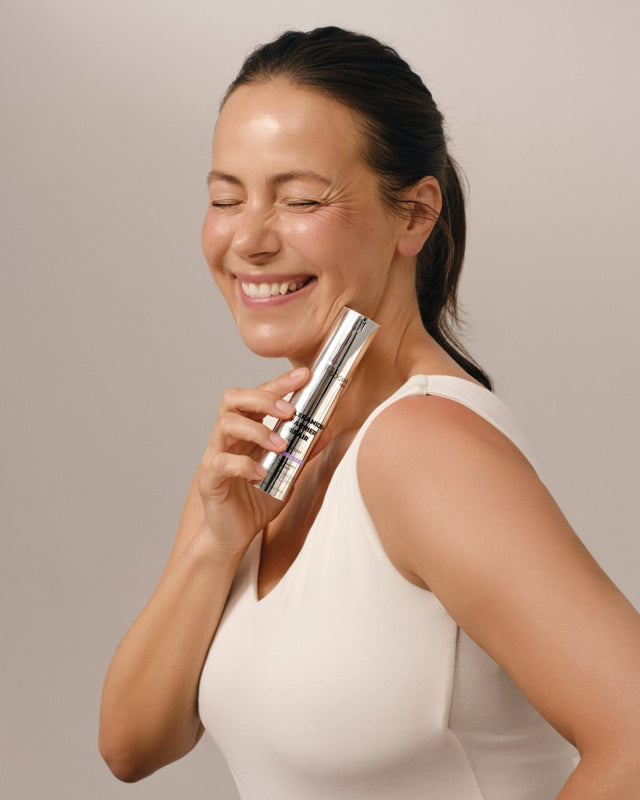
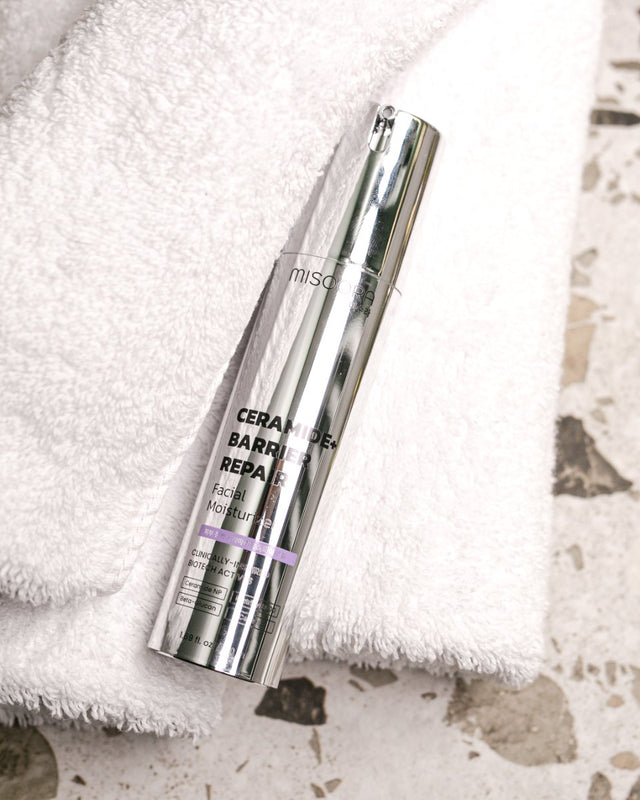
Ceramide+ Barrier Repair Moisturizer
A rich, fragrance-free cream built around the lipids a healthy barrier relies on. It locks in water under dry cabin air, so skin feels cushioned instead of tight when you land.
Shop Ceramide+05Do you need sunscreen on a plane?
If you sit by the window on a daytime flight, yes. Researchers who measured UV inside an airplane cockpit found that the windshield blocked UVB but let UVA through.7
minutes of flying at 30,000 feet gave pilots the same UVA dose as a 20-minute tanning bed session. Clouds and snow below can reflect even more.7
Passenger windows are smaller and that study measured the cockpit, so your dose by the window will differ. Still, it is a good reason to apply a broad-spectrum SPF 30 or higher before a daytime flight, as the American Academy of Dermatology recommends for everyday sun protection, and to pull the shade when the sun is on your side.8
06How to pack a carry-on skincare kit
Liquids, gels and creams in your carry-on must be in containers of 3.4 ounces (100 milliliters) or less, all fitting in one quart-size bag.9 Most serums fit easily. Larger tubes and jars go in checked luggage or into small refillable pots.

The short list for a flight bag:
- A gentle cleanser for the night you arrive
- A rich, fragrance-free moisturizer to reapply in the air
- Broad-spectrum SPF 30 or higher
- Lip balm and hand cream
- Your evening serums, so your routine does not stop for the holidays
Leave exfoliating pads, strong peels and anything you have not tried before at home.


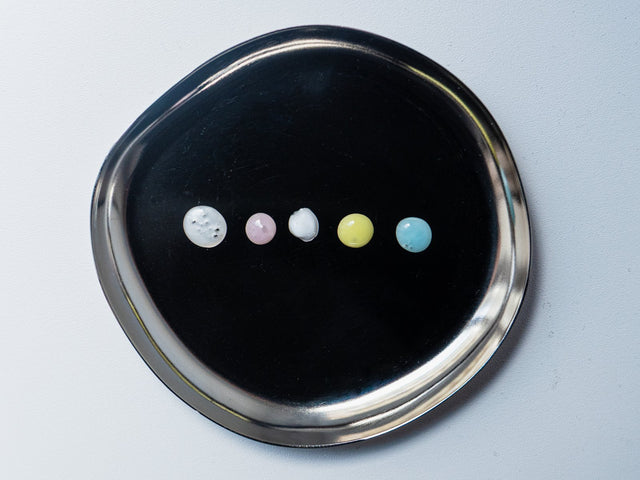
Skin Recharge Set
All five steps, AM and PM. The easiest way to pack a full routine.
Shop the full routine
07How to bring your skin back after you land

The first night is about rehydrating and calming, not about results. Keep the shower short, 5 to 10 minutes in warm water, pat skin dry, and put moisturizer on within minutes while skin is still damp.8
Hotel rooms and heated homes can be dry in winter. If you can, run a portable humidifier in the bedroom while you sleep, and clean it regularly.8
Because mature skin rebuilds its barrier more slowly,6 give it two or three easy nights before you bring back strong actives.
A simple first-night routine
- Cleanse gentlyUse a gentle cleanser without working up a thick lather, then pat skin dry instead of rubbing.8
- Back to your routineOnce skin feels calm, go back to your usual evening order: retinal first, then PDRN serum, then moisturizer.
- Seal it inFinish with a rich moisturizer, and add an extra layer on any tight or flaky patches.

Our pick for the nights after a flight
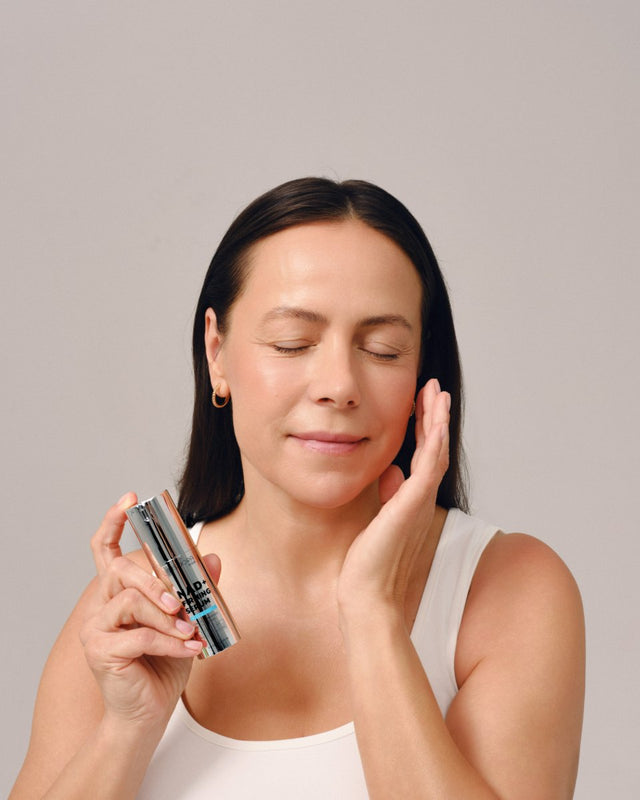
PDRN Exosome EGF Night Renewal Serum
2,000 ppm PDRN with exosomes, EGF and peptides in a lightweight evening serum. Applied before your moisturizer, it helps tired, travel-dry skin look smoother and more rested by morning.
Shop PDRN serum
Our pick for the first night
Centella Ceramide Amino Acid Cleanser
A gentle, low-foam cleanser that lifts sunscreen and a day of travel without leaving skin squeaky or tight.
Shop the cleanserKey takeaways
- Cabin humidity is typically below 20%, under the level buildings are designed to keep for comfort.1
- A few hours of dry air is enough to lower skin water content and roughen texture.2
- After menopause, skin is drier and its barrier recovers more slowly, so flights show more.46
- Seal the barrier before you fly, reapply a rich, fragrance-free moisturizer on board, and wear SPF by the window.78
- After landing: short warm shower, moisturizer on damp skin, a humidifier if you can, and two or three gentle nights.8
FAQ
Why does my skin look older after a long flight?
Dry cabin air pulls water out of the outer layer of skin. In lab studies, a few hours at low humidity made skin measurably rougher,2 which makes fine lines and texture more visible. It is temporary and improves once skin is rehydrated.
Should I wear makeup on a plane?
On a short flight it is fine. On a long one, a moisturizer and SPF are kinder to dry skin, because you can reapply cream every few hours without disturbing makeup. Add makeup before you land if you want.
Is a sheet mask on the plane a good idea?
It can feel nice, but most sheet masks are mostly water, which evaporates quickly in dry cabin air. If you use one, follow with a rich moisturizer right away to seal in the water.8
Can I bring skincare in my carry-on?
Yes. In the US, liquids, gels and creams must be 3.4 ounces (100 milliliters) or less per container and fit in one quart-size bag.9
Should I use retinol or retinal while traveling?
Keep it if your skin tolerates it well. If it tends to sting in winter, pause it the night before you fly and for the first night or two after you land, then return to your usual order: retinal, PDRN serum, moisturizer.
When should I see a dermatologist?
If dryness comes with intense itching, cracking, a rash or burning that does not settle with moisturizer, see a board-certified dermatologist.8
References
- National Research Council. The Airliner Cabin Environment and the Health of Passengers and Crew. Washington, DC: National Academies Press; 2002.
- Egawa M, Oguri M, Kuwahara T, Takahashi M. Effect of exposure of human skin to a dry environment. Skin Research and Technology. 2002;8(4):212–218.
- Sunwoo Y, Chou C, Takeshita J, Murakami M, Tochihara Y. Physiological and subjective responses to low relative humidity. Journal of Physiological Anthropology. 2006;25(1):7–14.
- Thornton MJ. Estrogens and aging skin. Dermato-Endocrinology. 2013;5(2):264–270.
- Kamp E, Ashraf M, Musbahi E, DeGiovanni C. Menopause, skin and common dermatoses. Part 2: skin disorders. Clinical and Experimental Dermatology. 2022;47(12):2117–2122.
- Ghadially R, Brown BE, Sequeira-Martin SM, Feingold KR, Elias PM. The aged epidermal permeability barrier. Journal of Clinical Investigation. 1995;95(5):2281–2290.
- Sanlorenzo M, Vujic I, Posch C, Cleaver JE, Quaglino P, Ortiz-Urda S. The risk of melanoma in pilots and cabin crew: UV measurements in flying airplanes. JAMA Dermatology. 2015;151(4):450–452.
- American Academy of Dermatology. Dermatologists’ top tips for relieving dry skin.
- Transportation Security Administration. Liquids rule.
Written by MISOORA Editorial. This article is for general information and is not medical advice. Skincare results described are cosmetic and vary from person to person. If you have concerns about changes in your skin, talk to your doctor or a board-certified dermatologist.