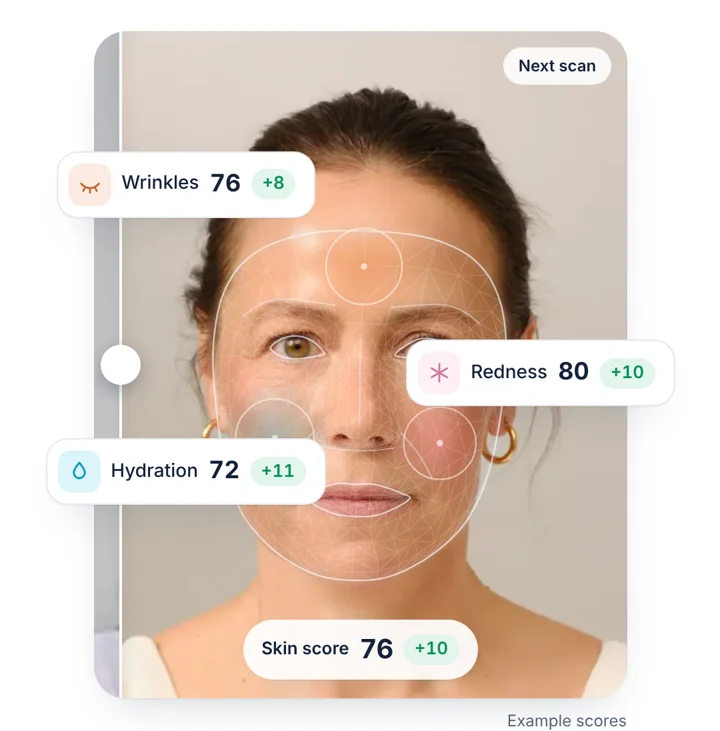


Menopause & Mature Skin · Hydration Guide
Drink eight glasses a day and your skin will glow. It is one of the most repeated beauty tips, and when skin turns dry and tight after menopause, it is the first thing many women try. Here is what the research actually shows about water and skin, how much fluid you need after 50, and what hydrates dry skin from the outside.

The short answer
A little, and mostly if you were not drinking enough to begin with. In a small study, adding about 2 liters of water a day for a month raised measured skin hydration, with the clearest gains in women who usually drank less.1 A systematic review of six studies called the evidence weak and said it is unclear whether the effect holds in older skin.2 After menopause, dryness comes largely from a weaker skin barrier,3 so the bigger fix is on the surface: short warm showers, a cream on damp skin and a humidifier at night.45
01Does drinking water hydrate your skin?
Some of it does. Water you drink reaches the skin from below, through the blood supply in the deeper layer, the dermis. The real question is how much of it ends up in the thin outer layer you can see and feel, and how long it stays there.
That outer layer keeps water only as well as its barrier works. Writing for Harvard Health, dermatologist Kristina Liu explains that avoiding irritation helps maintain the healthy skin barrier your skin needs to hold on to water from the inside.5 If the barrier is weak, water that arrives from below simply evaporates faster.
02What the studies actually found
The best-known study is small. In 2015, researchers asked 49 healthy women aged 22 to 34 to add about 2 liters of water a day to their usual diet for 30 days. Hydration rose significantly in both the surface and the deeper layers of the skin, and the effect was strongest in women who normally drank less than 3.2 liters a day from all sources. Water loss through the skin barrier did not change in any meaningful way.1
Studies a 2018 systematic review found on drinking water and skin hydration in healthy adults. Its verdict: the evidence is weak in both quantity and quality.2
That review, published in Skin Research and Technology, concluded that extra water may increase hydration of the outer skin layer, with slight gains in deeper hydration mostly in people who drank less before. Effects on barrier water loss were unclear, no one knows the mechanism, and the authors wrote that it is unclear whether the link exists in older people at all. The average ages in the studies ranged from 24 to 56.2
So the evidence points one way. If you are short on fluids, drinking more may help your skin a little. If you already drink enough, more water is unlikely to fix dry, tight skin on its own.
03Why skin stays dry after menopause, even if you drink enough
Falling estrogen changes the skin itself. At the American Society for Dermatologic Surgery meeting this month, dermatologist Sabrina Fabi linked the drop in estrogen to drier skin, a weaker skin barrier and thinner skin, and noted that women lose about 30% of their skin collagen in the first five years after menopause.3
Older skin also repairs its barrier more slowly. In a classic study, 24 hours after mild damage, younger adults had restored about 50% of their barrier, while adults over 80 had restored about 15%.6 Every hot shower, harsh cleanser or blast of dry indoor heat leaves a mark that lasts longer.
Think of it as a leak rather than an empty tank. Pouring in more water helps only so much while it keeps escaping through the surface. Fixing the leak, by protecting the barrier and sealing water in, is where you will see and feel the difference.

Dry or dehydrated?
Skin care marketing often splits the problem in two: dry skin, short on oil, and dehydrated skin, short on water. After menopause most women have a bit of both, and the fix overlaps.
Skin that feels tight right after washing and looks dull or crepey by evening needs the same thing either way: a gentler cleanse, water-binding ingredients and a cream that seals them in.
04How much water should you drink after 50?
There is no single number. Mayo Clinic gives a range for adults of about 11.5 cups (2.7 liters) to 15.5 cups (3.7 liters) of total fluid a day, from all sources, and notes that food provides about 20% of the water you need.7 You need more in hot weather and when you lose fluid through fever, vomiting or diarrhea.7
Age makes this trickier. Older adults have less water in their bodies, and kidney function can change with age. A geriatric nurse specialist at Cleveland Clinic puts it plainly: by the time an older adult feels thirsty, that is already a sign of early dehydration.8 UCLA Health reports that up to 40% of adults over 65 may be chronically dehydrated.9
The practical move is not to wait for thirst. Keep a glass or bottle where you can see it, drink with every meal, and count soups, tea and water-rich fruit and vegetables toward your total. If your doctor has asked you to limit fluids for a heart or kidney condition, follow that advice instead.
05What actually hydrates dry skin after menopause
Dermatologists treat dry skin from the outside in. These are the steps the American Academy of Dermatology (AAD) recommends, with one addition from Harvard Health.
- Keep showers short and warmFive to ten minutes, warm rather than hot water, then pat skin dry instead of rubbing.4
- Moisturize while skin is still dampRight after washing your face or showering, and again whenever skin feels dry.4
- Choose a cream over a lotionThe AAD says ointments and creams are more effective than lotions, and lists ingredients such as glycerin, hyaluronic acid, dimethicone, petrolatum and shea butter.4
- Go gentle and fragrance-freeUse a gentle cleanser and fragrance-free products. The AAD warns that unscented products can still contain masking chemicals that irritate dry skin.4
- Add water to the airRun a humidifier in your bedroom while you sleep and clean it regularly.4 Harvard Health suggests keeping indoor humidity above 30%.5

Our pick for sealing water in
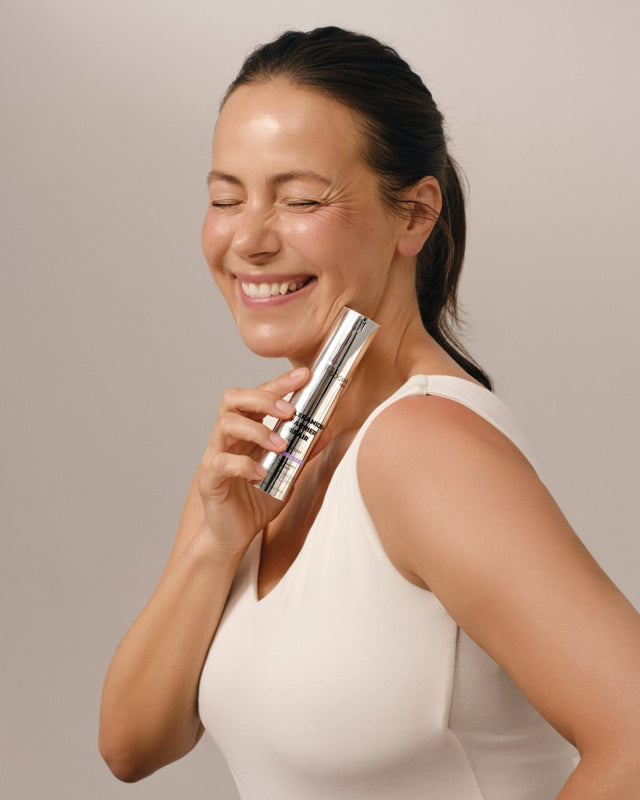
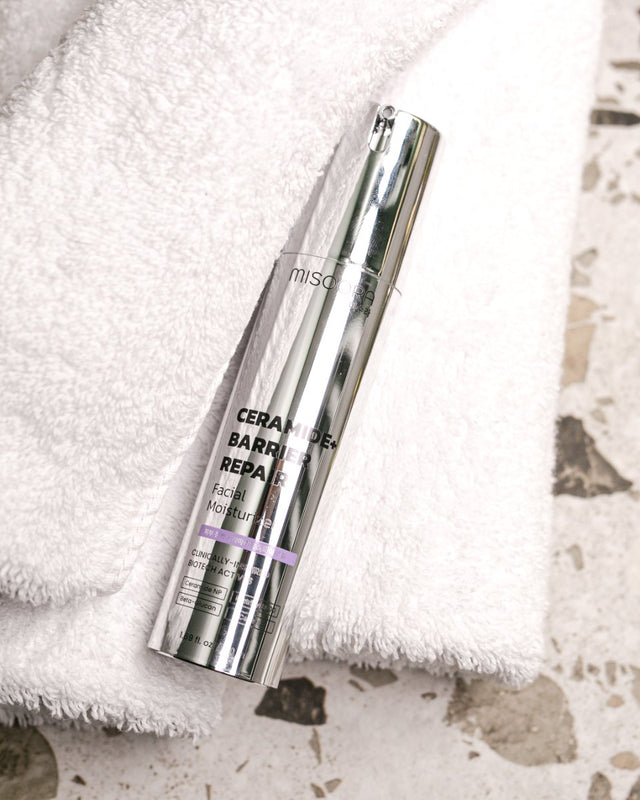
Ceramide+ Barrier Repair Moisturizer
A rich ceramide cream for skin that feels dry and tight after menopause. Smooth it on while skin is still a little damp to help hold water in, so skin looks smoother and feels more comfortable by morning.
Shop the moisturizer
Our pick for a gentle cleanse
Centella Ceramide Cleanser
A mild cleanser with centella and ceramides that removes sunscreen and makeup without that squeaky, stripped feeling, so the next layers have a calmer base.
Shop the cleanser06Skin hydration myths, checked
False
“If my skin is dry, I must be dehydrated.”
Not necessarily. After menopause, dryness tracks with a weaker skin barrier.3 Extra water seems to help mainly people who were drinking too little.12
Partly true
“Everyone needs exactly eight glasses a day.”
Fluid needs vary. Mayo Clinic gives a range of about 11.5 to 15.5 cups of total fluid a day for adults, and about a fifth of your water comes from food.7
False
“A long, hot bath will rehydrate my skin.”
Hot water and long soaks dry skin out. Harvard Health advises warm water and no more than one 10-minute shower a day, and warns that saunas and hot tubs can also dry skin.5
False
“If I drink enough water, I can skip moisturizer.”
None of the water studies tested skipping moisturizer, and dermatologists still put moisturizer on damp skin at the center of dry-skin treatment.24
07A simple inside-and-out hydration routine
Water and skin care work as a team: fluids keep the supply coming, and your routine stops it from escaping. Here is how that looks across a day with MISOORA.
Morning
Hydrate and protect

Night
Repair


Make it a habit, not a chore
Pair a glass of water with each step you already do: one when you wake up, one with every meal, one while your night serum sinks in. Turn on the bedroom humidifier when you take off your makeup.
If your skin is flaky, keep retinal to a few nights a week for now and use the PDRN serum and moisturizer every night. Comfortable skin first, then build up.
Our pick for overnight repair
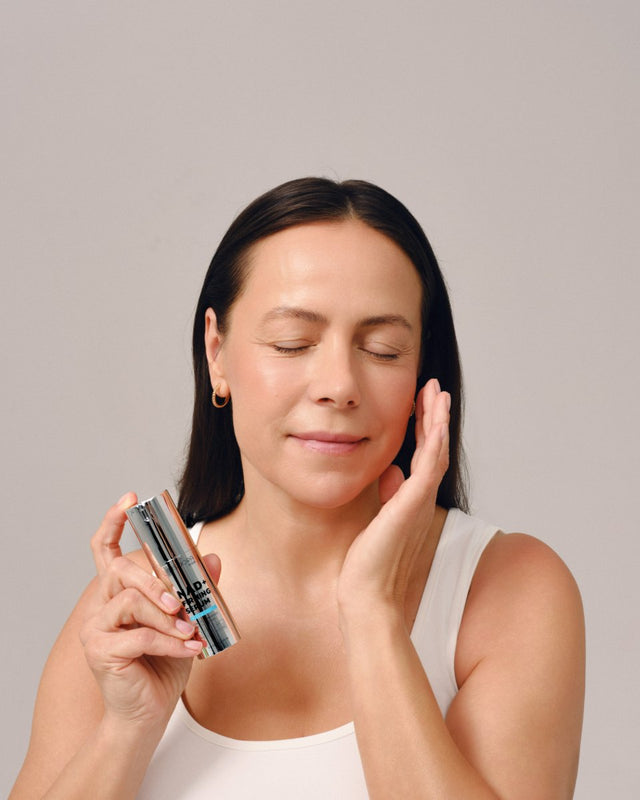
PDRN Exosome EGF Skin Renewal Serum
2,000 ppm PDRN with exosomes, EGF and peptide to support the look of plumper, smoother skin overnight. Apply after retinal and before moisturizer.
Shop the PDRN serum


Key takeaways
- Drinking more water may raise skin hydration a little, mainly if you were drinking too little.
- The research is small, mostly in younger adults, and a systematic review called it weak.
- After menopause, dry skin is mostly a barrier problem: water escapes faster than it arrives.
- Adults need roughly 11.5 to 15.5 cups of total fluid a day, about a fifth of it from food. Don’t wait for thirst.
- For the skin you can see, focus on short warm showers, cream on damp skin and a bedroom humidifier.
FAQFrequently asked questions
Does drinking water help wrinkles?
There is no good evidence that it does. The small studies measured hydration and skin stretch, mostly in younger adults, and the review that pooled them called the evidence weak.2 For the look of fine lines, a retinoid and a good moisturizer do more.
How long does it take for drinking more water to show on skin?
In the 2015 study, women added water for 30 days and hydration was measured at day 15 and day 30.1 If you were under-drinking, give it a few weeks. If nothing changes, the problem is more likely your barrier than your water intake.
Is hyaluronic acid better than drinking water for dry skin?
They do different jobs. Hyaluronic acid is one of the ingredients the AAD lists for dry skin, and it works at the surface.4 It works best under a cream that keeps the water from evaporating.
What kind of moisturizer is best for dry skin after menopause?
A cream or ointment rather than a lotion, fragrance-free, applied while skin is still damp.4 Our Ceramide+ Barrier Repair Moisturizer is made for exactly that step.
Should I use a humidifier in winter?
Yes, especially in the bedroom while you sleep. The AAD recommends one for dry skin and says to clean it regularly to prevent mold.4 Harvard Health suggests keeping humidity above 30%.5
Can I keep using retinal if my skin feels dry?
Usually, yes. Use it on dry skin a few nights a week, follow with the PDRN serum, and finish with a generous layer of moisturizer. If skin stings or peels, take a few nights off and build back up slowly.
Keep reading: Why is my skin so dry after menopause? A winter plan · Hyaluronic acid or ceramides after menopause?
References
- Palma L, Marques LT, Bujan J, Rodrigues LM. Dietary water affects human skin hydration and biomechanics. Clinical, Cosmetic and Investigational Dermatology. 2015;8:413–421.
- Akdeniz M, Tomova-Simitchieva T, Dobos G, Blume-Peytavi U, Kottner J. Does dietary fluid intake affect skin hydration in healthy humans? A systematic literature review. Skin Research and Technology. 2018;24(3):459–465.
- Grasso GM. Consider hormone therapy to improve menopause-related skin changes (report on a presentation by Sabrina G. Fabi, MD, at the American Society for Dermatologic Surgery Annual Meeting). Healio Dermatology. November 13, 2026.
- American Academy of Dermatology. Dermatologists’ top tips for relieving dry skin. Updated January 2026.
- Liu K. Banishing dry winter skin. Harvard Health Blog. March 14, 2019.
- Ghadially R, Brown BE, Sequeira-Martin SM, Feingold KR, Elias PM. The aged epidermal permeability barrier. Journal of Clinical Investigation. 1995;95(5):2281–2290.
- Mayo Clinic Staff. Water: How much should you drink every day? Mayo Clinic. January 21, 2026.
- Cleveland Clinic. Drink up: the connection between age and dehydration (with geriatric clinical nurse specialist Anne Vanderbilt, CNS). May 30, 2023.
- UCLA Health. Hydration and older adults: why water matters more as you age. May 1, 2025.
Written by MISOORA Editorial. This article is for general information and is not medical advice. If you have a heart or kidney condition, take medicines that affect fluid balance, or have very dry, itchy or cracked skin that does not improve, talk to your doctor or dermatologist. Product results are cosmetic and vary from person to person.